In this article
- The Legend of the Protective Triangle: Why Are There 3 Linh Ung Pagodas?
- 1. Imperial Origins in the 19th Century (Earth / South)
- 2. Balance in the Heights (Mountain / West)
- 3. The Shield Against the Ocean (Sea / East)
- What Does the Typhoon Data Actually Say?
- History, Culture, and Practical Guide to the 3 Pagodas
- 1. Linh Ung Bai But (Son Tra Peninsula) – Guardian of the Sea
- 2. Linh Ung Non Nuoc (Marble Mountains) – The Ancestral Link
- 3. Linh Ung Ba Na (Ba Na Hills) – Sanctuary in the Clouds
- How to Organize Your Visit: 3-Day Itinerary
- Cultural Etiquette and Temple Respect
Is there an invisible shield protecting Da Nang? This is the legend of the three sanctuaries and the sacred triangle.
Look closely at the map, and three distinct points trace an intentional triangle across the coastline. At each vertex stands a temple sharing the exact same name: Linh Ung.
Local lore holds that these three pagodas are neither simple tourist attractions nor an architectural coincidence. Together, they form Da Nang’s “Sacred Triangle of Protection”—a spiritual network conceived to calm ocean forces, draw prosperity, and shield the coastal population from fierce Pacific typhoons.
In Sino-Vietnamese, Linh Ứng translates roughly to “miraculous answers to prayers.” In this guide, we dive into the spiritual heritage, history, meteorological anomalies, and mystique behind each sanctuary.
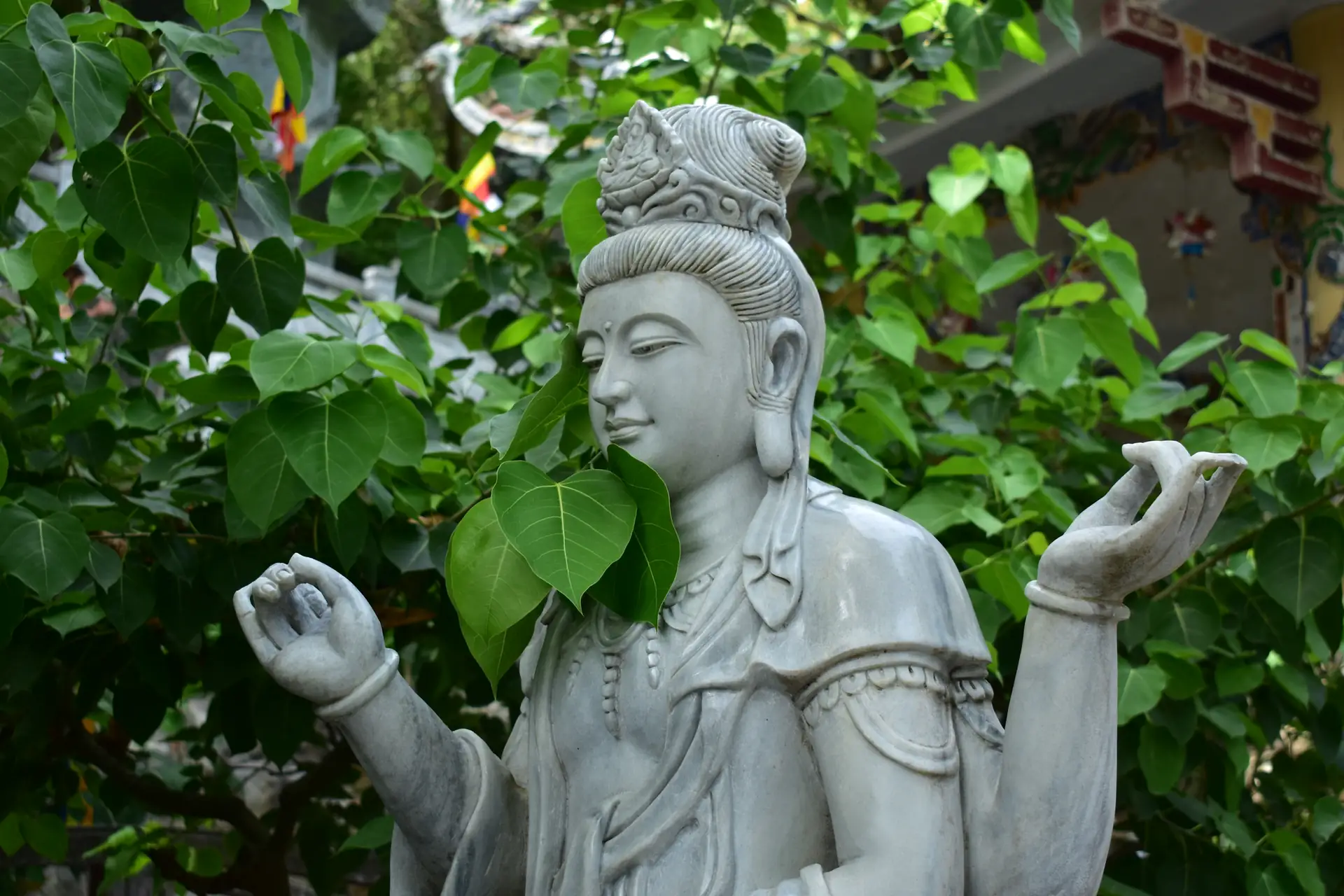 Statue at Linh Ung Non Nuoc (Marble Mountains)
The Legend of the Protective Triangle: Why Are There 3 Linh Ung Pagodas?
The presence of these three pagodas did not stem from a predetermined urban master plan. Instead, it was an organic evolution spanning nearly two centuries, shaped by faith, distinct coastal geography, and recurring natural disasters weaving a spiritual shield.
Da Nang has historically been among the coastal areas most vulnerable to typhoons in Central Vietnam. The progressive construction of each pagoda marks three distinct eras and three cardinal directions across the city map.
| Pagoda | Location | Element | Key Feature |
|---|---|---|---|
| Linh Ung Non Nuoc | Marble Mountains | Earth | The oldest (1825), imperial origins |
| Linh Ung Ba Na | Ba Na Hills | Mountain | At 1,500 m above sea level, cloud-wrapped |
| Linh Ung Bai But | Son Tra Peninsula | Sea | Lady Buddha (67 meters / 220 ft) |
1. Imperial Origins in the 19th Century (Earth / South)
The first pagoda, Linh Ung Non Nuoc, was founded in 1825 by King Minh Mang on Mount Thuy Son within the Marble Mountains. During that era of maritime expansion, the monarch sought to consecrate the land and invoke celestial protection for the realm. Following its construction, the surrounding coast enjoyed decades of thriving fishing seasons, planting the first seeds of the Linh Ung mythos.
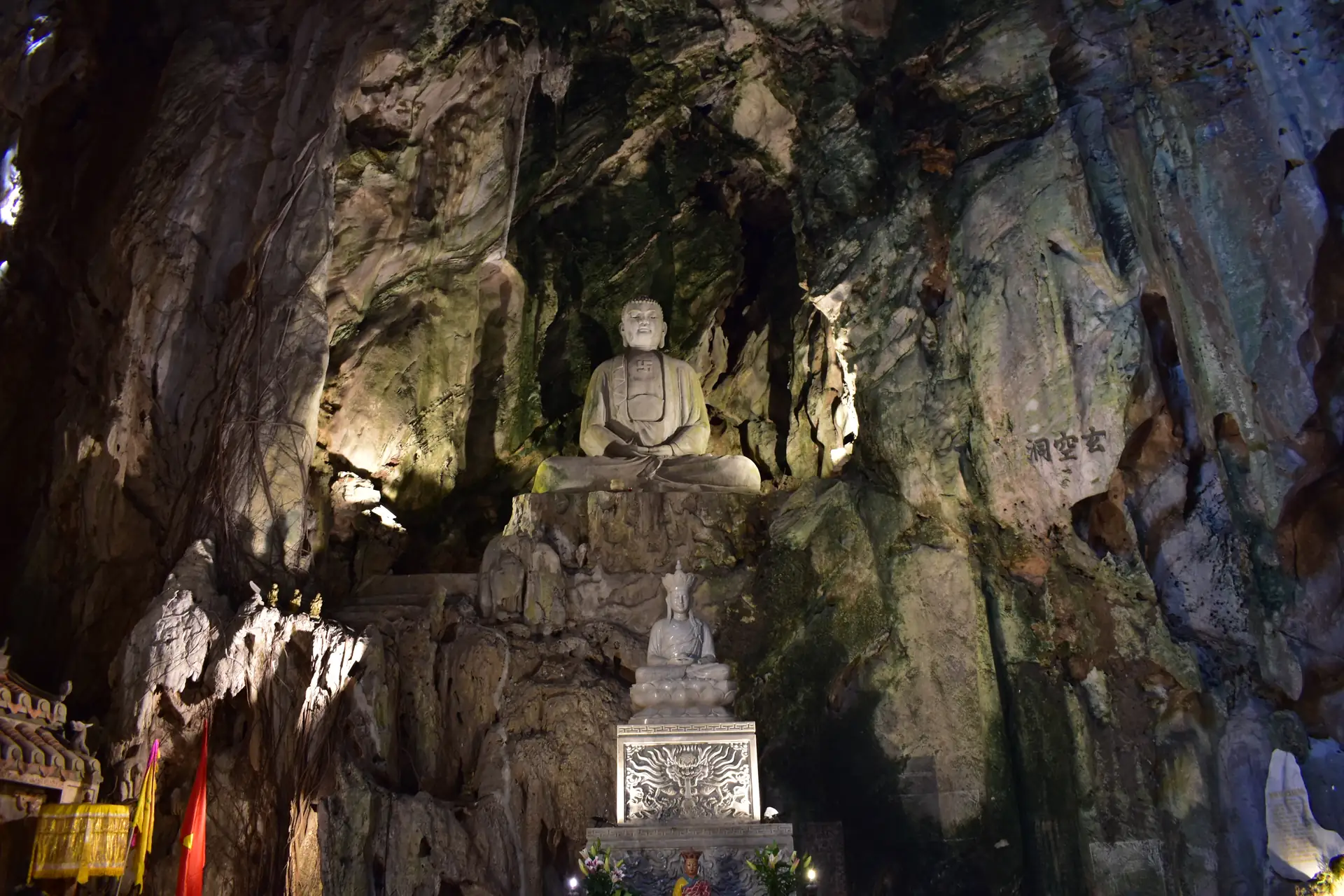 Stone-carved Buddha inside Huyen Khong Cave, Marble Mountains (Mount Thuy Son)
2. Balance in the Heights (Mountain / West)
At the dawn of the 21st century, as Da Nang transformed and local Buddhist practices experienced a renaissance, the second temple was erected: Linh Ung Ba Na, perched nearly 1,500 meters above sea level. According to Phong Thủy (Feng Shui) principles, establishing a sanctuary on the highest peak of the Annamite Range anchored protective mountain energy, balancing forces between earth and sky.
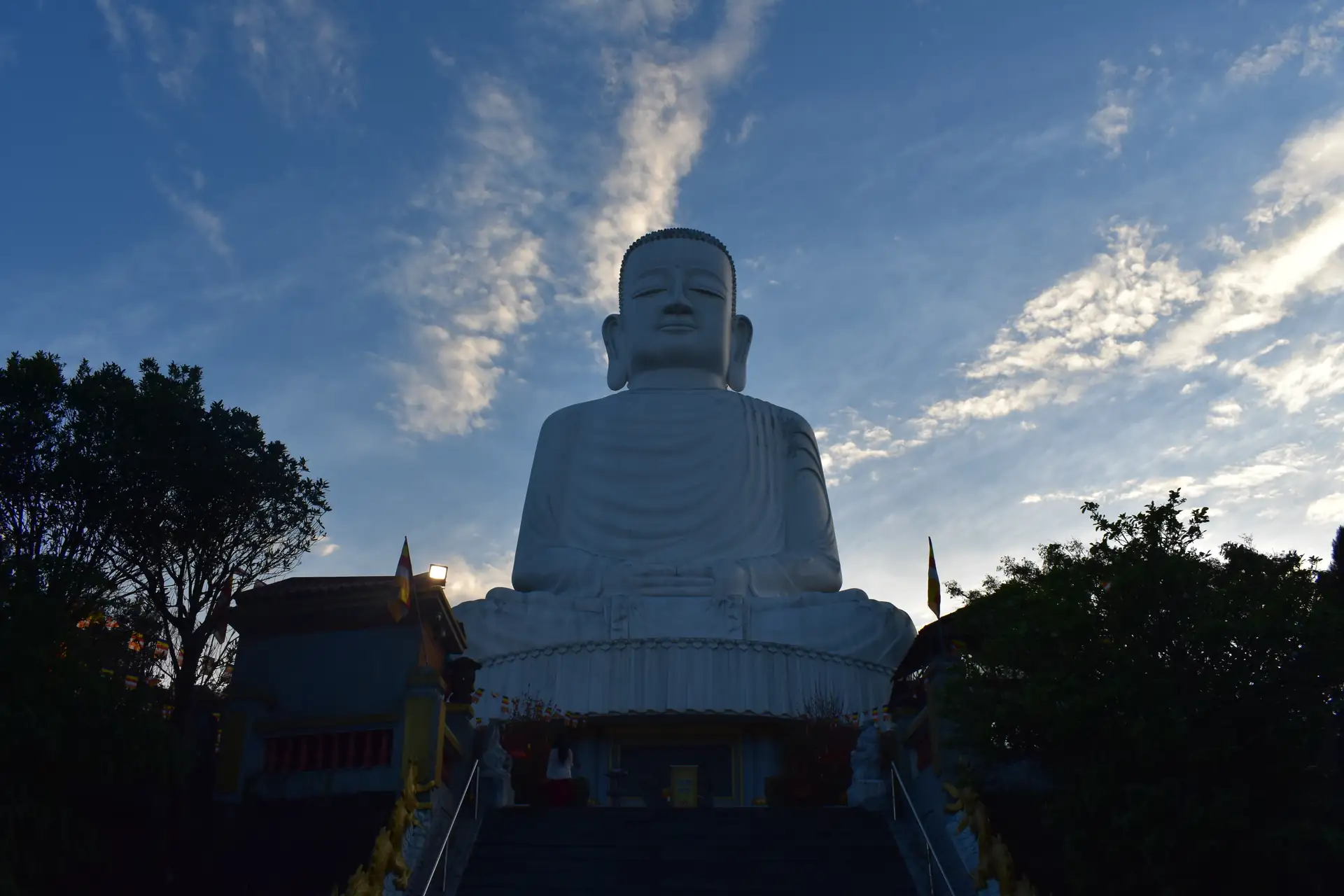 Giant Buddha at Ba Na Hills, Linh Ung Ba Na
3. The Shield Against the Ocean (Sea / East)
The final vertex is the most recent and deeply symbolic. Legend tells of a modest wooden Buddha statue washing ashore on the Son Tra Peninsula in the 19th century. Local fishermen built a humble shrine, naming the cove Bãi Bụt (“Buddha’s Beach”). From that day forward, the bay’s turbulent waters turned remarkably calm.
In the early 2000s, spearheaded by the local community and led by Venerable Thich Thien Nguyen, construction began on Linh Ung Bai But. Completed in 2010, the complex is crowned by the monumental 67-meter Lady Buddha (Quan Am) statue—gazing intentionally over the bay to watch over seafarers and soothe incoming storms.
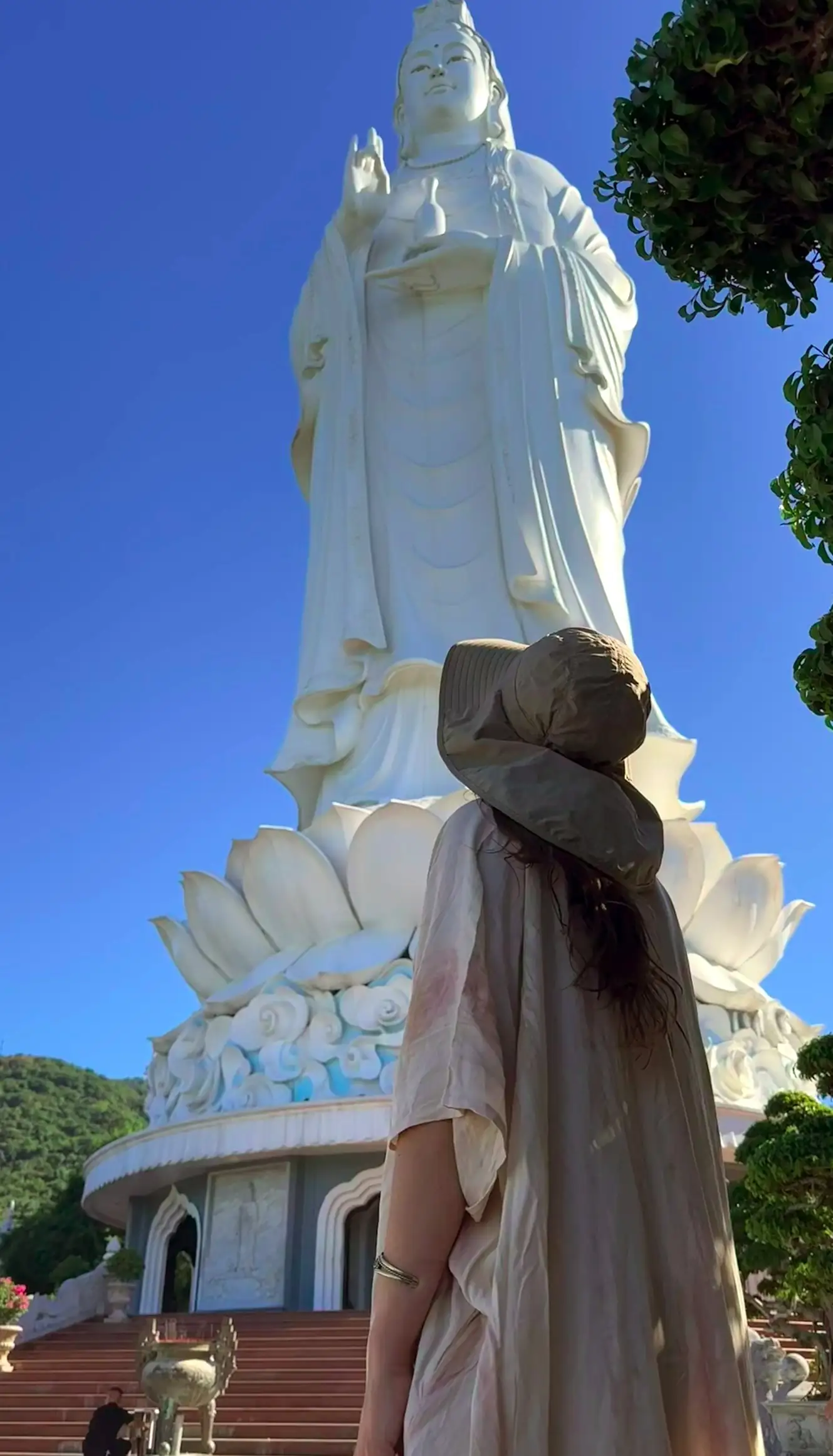 Lady Buddha (Quan Am) on Son Tra Peninsula
What Does the Typhoon Data Actually Say?
From a meteorological standpoint, official records reveal a compelling pattern. Following the inauguration of the Lady Buddha statue in 2010, several catastrophic typhoons tracking straight toward Da Nang—such as Typhoon Megi in 2010 and the historic Super Typhoon Haiyan in 2013—either veered sharply away at the eleventh hour or lost substantial strength before making landfall.
Science naturally points to typical atmospheric shifts, ocean current variations, and the natural barrier formed by the rugged Annamite Range. Culturally, however, locals see these diversions as direct proof of Linh Ung: miraculous answers to prayers.
Regardless of where one stands, this intersection of physical geography, documented weather events, and folklore is precisely what keeps the area’s mystique alive. If physical reality responds to fields of energy, observers, and probabilities, to what degree can collective consciousness, sustained communal intention, and sacred structures acting as energetic anchors influence physical phenomena? Or is it simply the human mind assigning poetic meaning to what is fundamentally meteorological chance?
History, Culture, and Practical Guide to the 3 Pagodas
1. Linh Ung Bai But (Son Tra Peninsula) – Guardian of the Sea
Set against the lush slopes of the Son Tra Peninsula, this is the most imposing and contemporary anchor of the triangle. Towering at 67 meters (roughly equivalent to a 30-story building), Quan Am is the tallest Buddha statue in Vietnam. Inside, 17 interior levels each honor a distinct manifestation of Buddha, featuring meditation chambers utilized by local monks.
Practical Details
- Price: Free admission.
- Getting There: By motorbike or Grab ride-hail (around 15–20 minutes from My Khe Beach).
- Best Time to Visit: 7:00 AM or between 4:00 PM and 6:00 PM for golden hour.
- Where to Stay: The northern stretch of My Khe Beach (Man Thai area) offers the easiest coastal access to Son Tra.
2. Linh Ung Non Nuoc (Marble Mountains) – The Ancestral Link
Founded in 1825 on Mount Thuy Son, this is the oldest and most historically grounded sanctuary in the triad. Surrounded by bamboo groves, natural karst grottos, and ancient stonework, it embodies a profound spiritual journey—housing both the Am Phu Cave (symbolizing the underworld) and the cathedral-like Huyen Khong Cave.
Practical Details
- Price: 40,000 VND (~$1.60 USD) general admission. Optional elevator: 15,000 VND.
- Getting There: 15 minutes south of downtown Da Nang, en route to Hoi An.
- Insider Tip: Wear sturdy, closed shoes or gripped sandals; the worn marble steps become remarkably slick in high humidity.
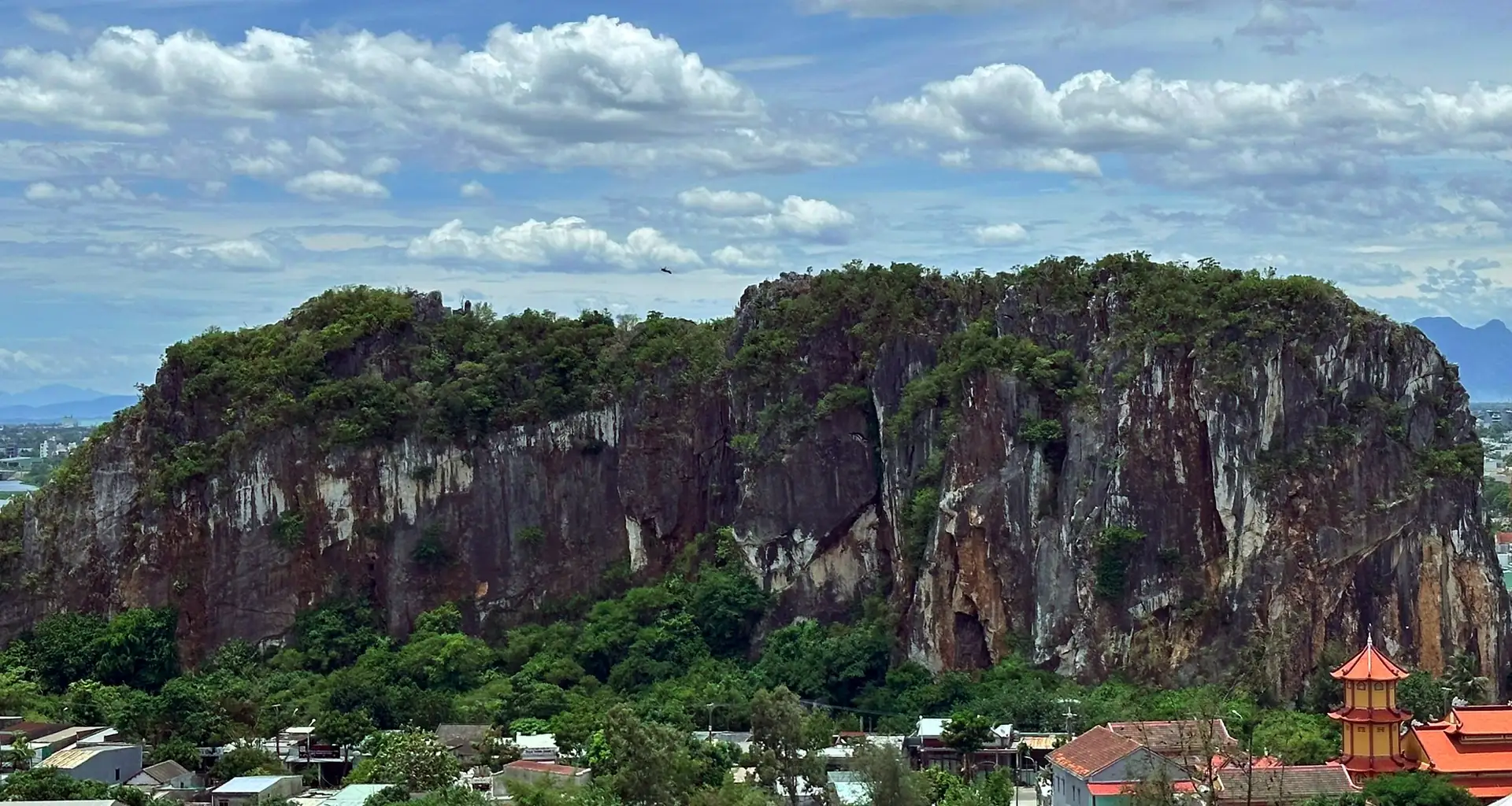 Panoramic view from atop the Marble Mountains in Da Nang
3. Linh Ung Ba Na (Ba Na Hills) – Sanctuary in the Clouds
Resting 1,500 meters above sea level, its central icon is a 27-meter seated Sakyamuni Buddha resting atop an intricate lotus pedestal. Given the mountain microclimate, sweeping cloud cover frequently rolls across the terrace, giving the impression that the temple is suspended mid-air. It provides a peaceful, serene refuge despite the bustling commercial backdrop of the Ba Na Hills theme park.
Practical Details
- Price: Included with standard Sun World Ba Na Hills entry (~900,000 VND / ~$36 USD).
- Getting There: Via the Ba Na Hills cable car network.
- Best Time to Visit: 8:00 AM to 10:00 AM to avoid mid-day tour groups.
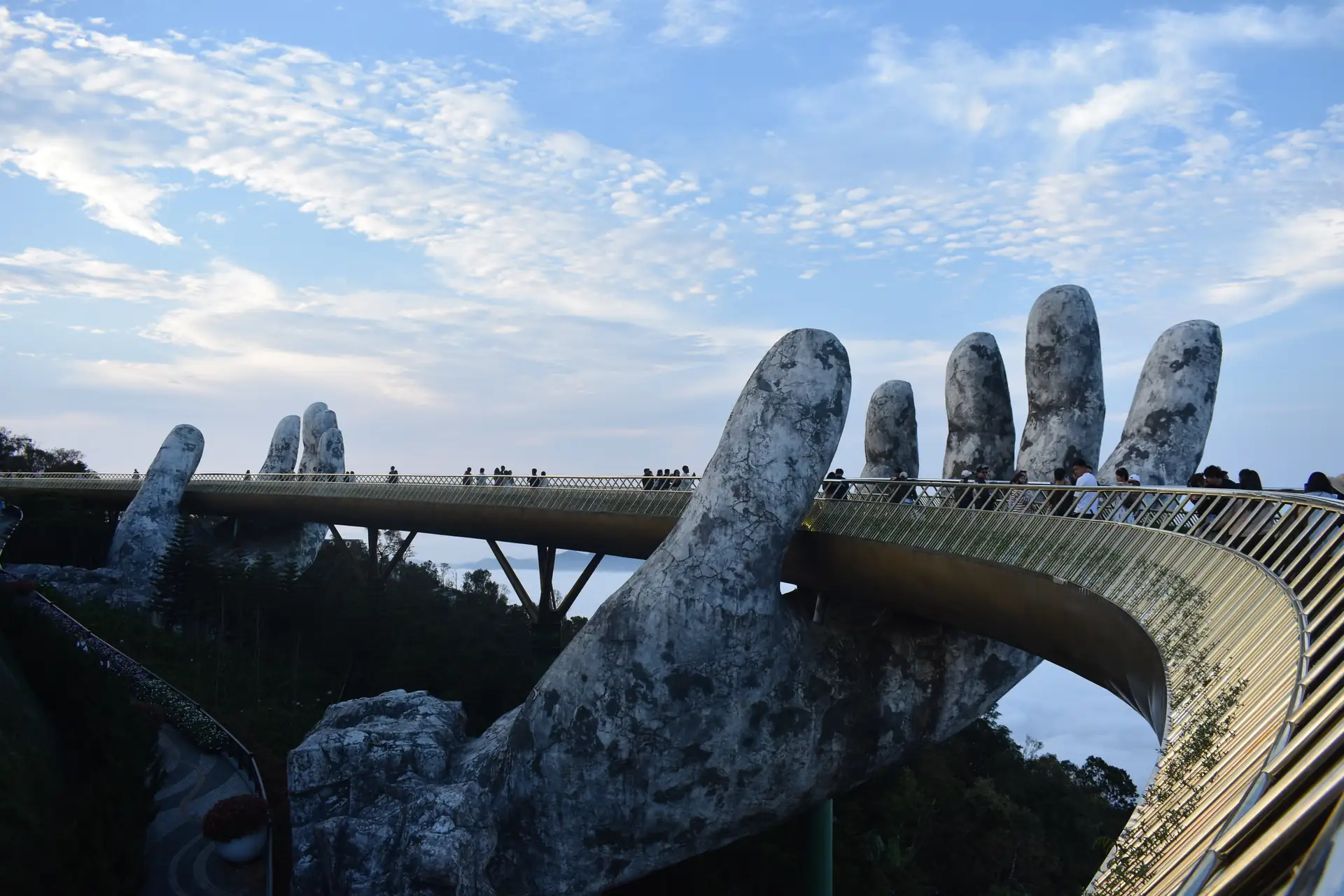 The Golden Bridge at Ba Na Hills
How to Organize Your Visit: 3-Day Itinerary
To genuinely take in the Sacred Triangle without rushing, dedicate at least three days to Da Nang, focusing on one pagoda per day.
- Day 1: Relaxing morning along My Khe Beach. Late afternoon on Son Tra Peninsula visiting Lady Buddha for sunset. Evening walk around the Dragon Bridge.
- Day 2: Morning exploring the karst caves at Marble Mountains and Linh Ung Non Nuoc. Afternoon heading down to the lantern-lit ancient town of Hoi An.
- Day 3: Full-day excursion to Ba Na Hills to see the pagoda above the clouds and walk the iconic Golden Bridge.
Cultural Etiquette and Temple Respect
While popular among travelers, these sites remain active places of Buddhist worship.
- Dress Code: Ensure shoulders and knees are covered.
- Footwear: Remove shoes, hats, and sunglasses before stepping into interior sanctuaries and prayer halls.
- Photography: Maintain quiet awareness in prayer areas; avoid turning your back directly to active worshipers or interrupting ceremonies.
🎒 Thinking about spending an extended season in Da Nang? If you’re working remotely, check out our guide on Living as a Digital Nomad in Vietnam: Cost of Living in Da Nang. And if you’re just starting to map out your route, stay tuned for our upcoming Da Nang Complete Guide.
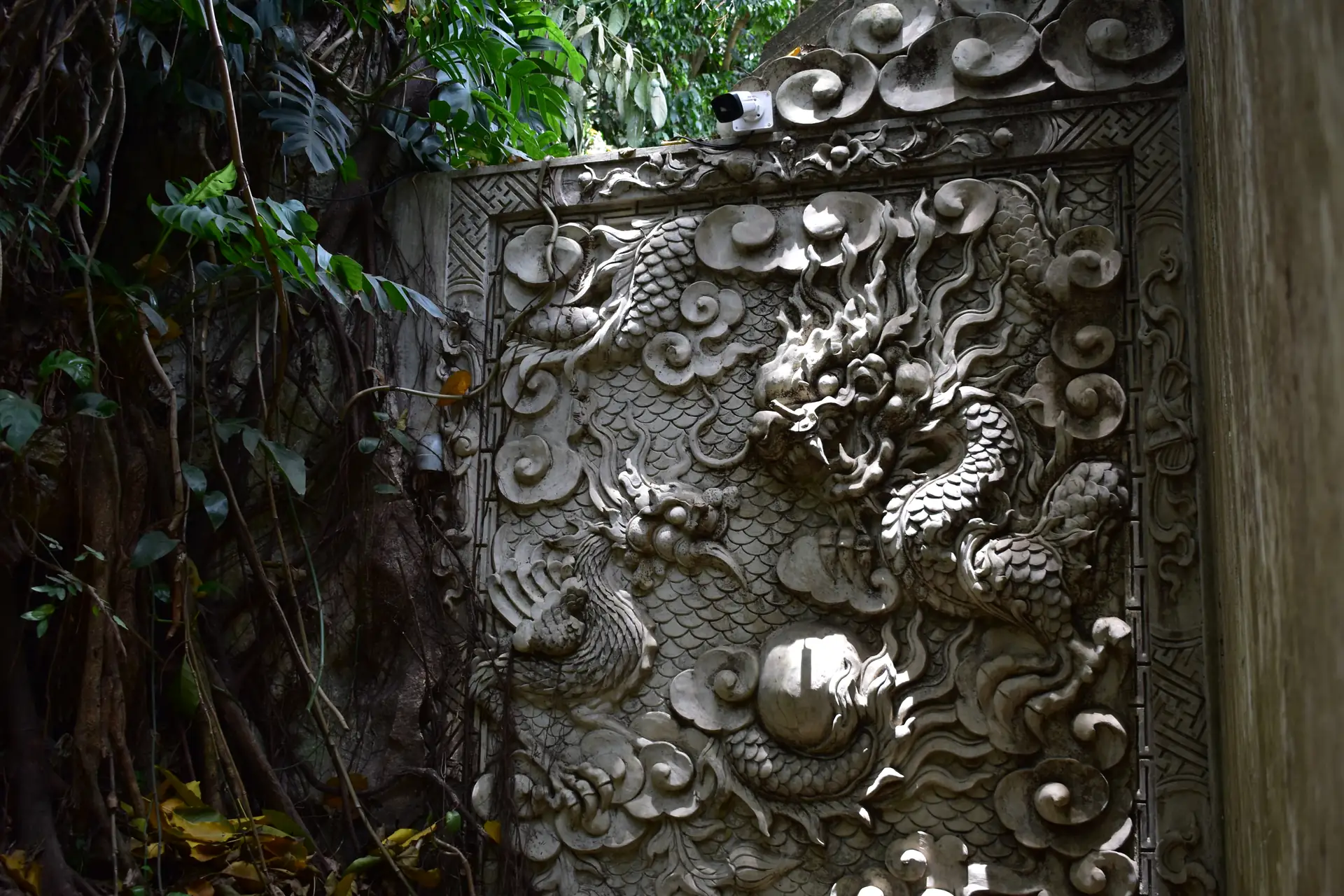 Carved stone dragon relief in the Marble Mountains (Ngũ Hành Sơn)
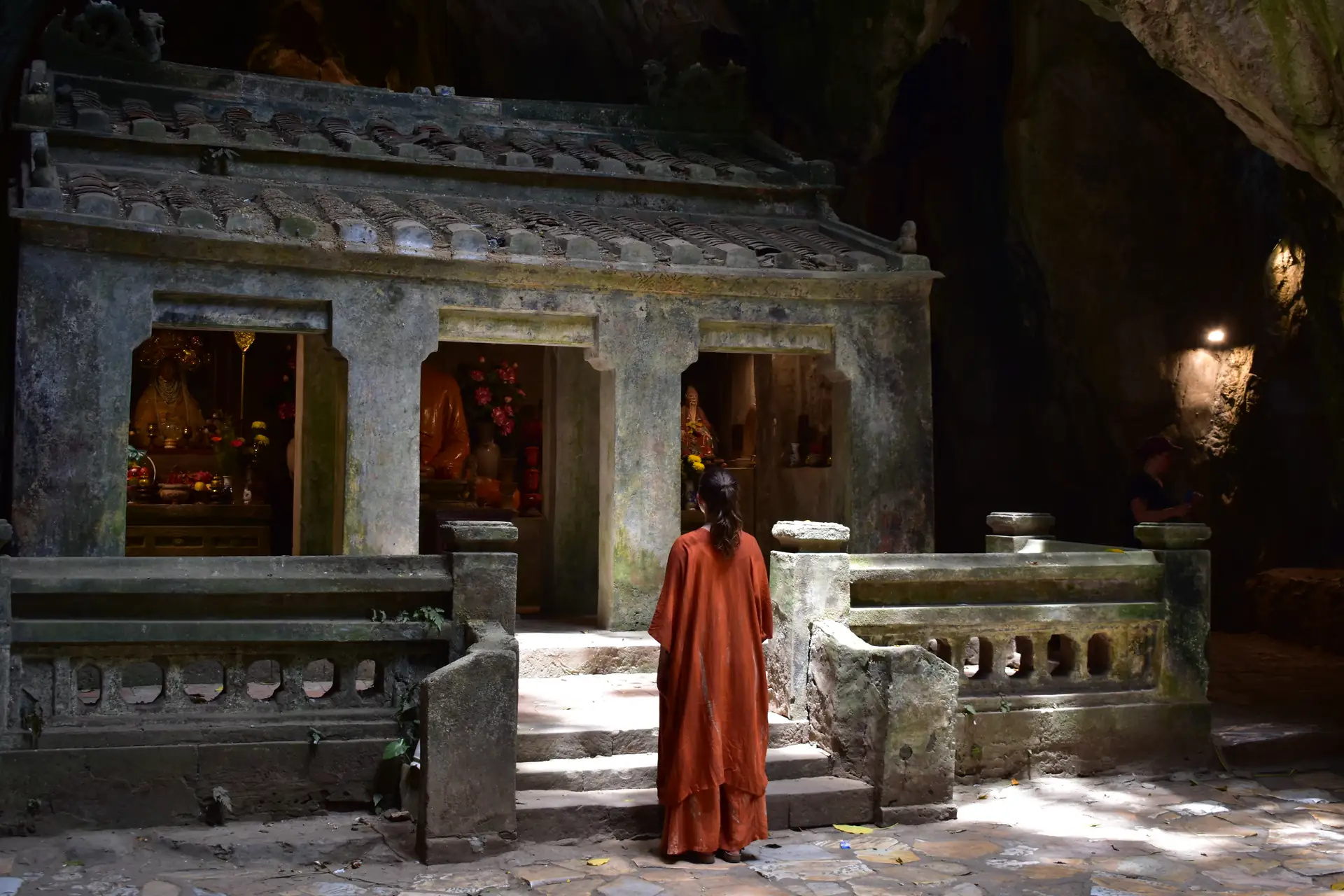 Sacred altars inside the natural marble caves at Linh Ung Non Nuoc.
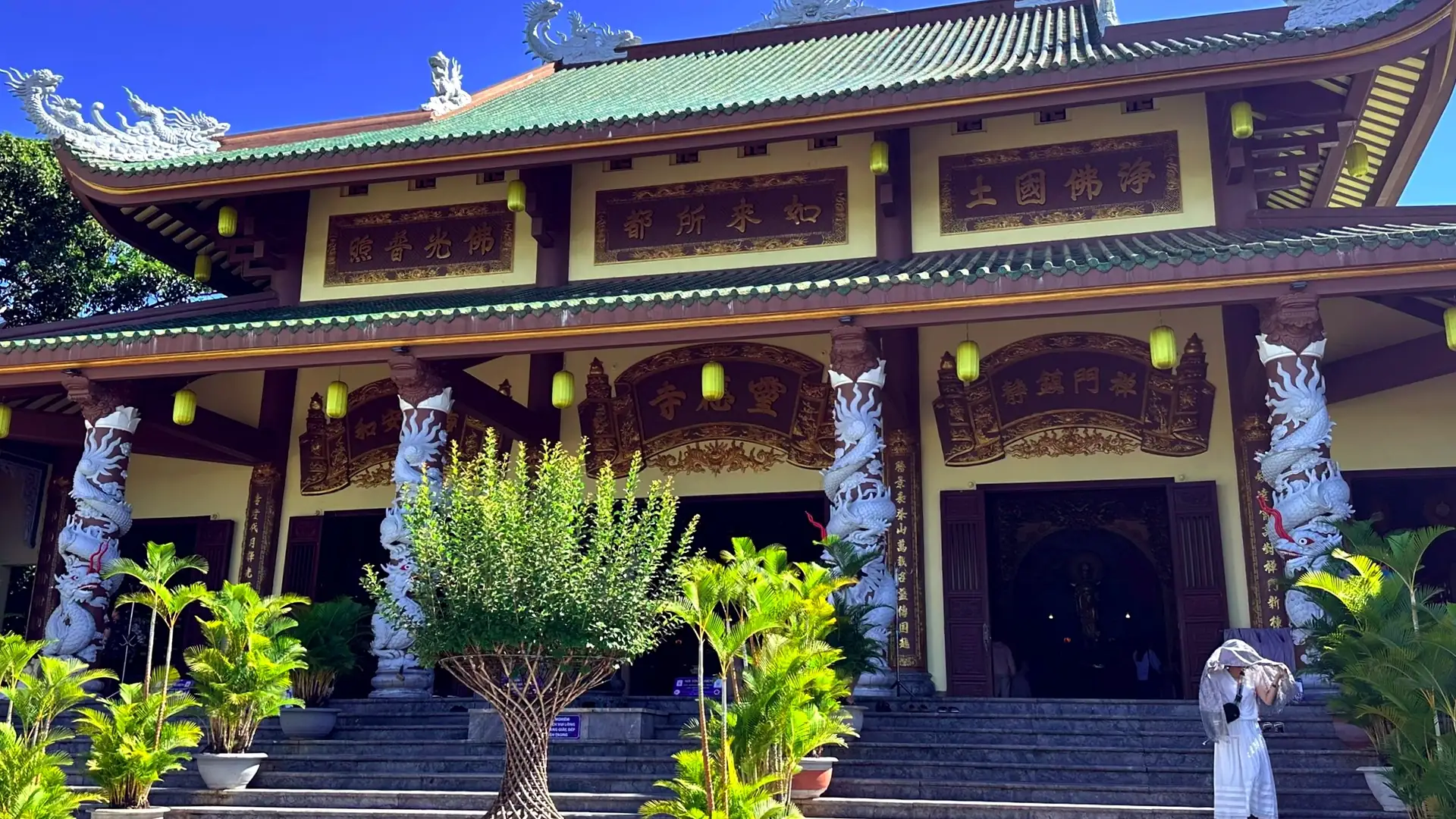 Main Hall (Chính điện) of Linh Ung Pagoda, Son Tra Peninsula, Da Nang.