What to Do in Ubud, Bali: What to See, Zones, and Tips. Guide 2026
En este artículo
- What to do in Ubud, Bali, Indonesia?
- Introduction
- Data about Ubud:
- 1. The Rice Terraces and the Subak System
- Famous Tegalalang Rice Terraces
- Jatiluwih Rice Terraces (UNESCO’s Jewel)
- 2. Waterfalls: The Refuge from Ubud’s Heat
- 3. Balinese Cooking Class at an Eco-Farm in Ubud: Our Star Experience
- 4. The experience of coffee and the controversial Kopi Luwak: the world’s most expensive coffee
- 5. Temples: Rules of Respect and the Rite of Purification
- Rules for entering temples in Bali:
- The Rite of Purification (Melukat)
- 6. Traditional Dance: The Power of Kecak and the Elegance of Legong
- Fire Dance: The Dance of Fire
- 7. Sacred Monkey Forest Sanctuary: The sacred home of monkeys
- 8. Ubud Palace (Puri Saren Agung)
- Where to Stay in Ubud
- Cost Table for Activities, Entrance Fees, and Tours in Ubud
- Frequently Asked Questions
What to do in Ubud, Bali, Indonesia?
#Ubud Guide Ubud combines authentic Balinese tradition with an infinite tourist proposal. In this complete guide, you’ll find activities of interest to do in Ubud, costs, and recommendations based on what we most enjoyed during our stay.
-
Introduction
Since we arrived in Ubud, every aspect of its aura has been delighting us: from its incredible constructions that seem like temples everywhere, to its penjors, bamboo handicrafts that hang outside the houses this time of year to celebrate Kuningan Day, a local ritual in Balinese Hindu tradition. The attentive and friendly people smiled down the streets, and in the small alleys, children pedaled their bicycles back and forth between laughter and shouts.
From the start, it seemed to us that there was a different aura here: yes, it’s touristy, but also more tranquil. There’s a lot of genuinely local and friendly people who look you in the eye and stop on the street to ask: How are you? That’s how Ubud taught us about Balinese culture and became our base for a 10-day period.
If you want to delve into the culture, you can read The Soul of Bali: Rituals, Family, and the Secret of Balinese Happiness
-
Data about Ubud:
Ubud, located between Bali’s central mountains, is an area that perfectly combines tourism and local culture. The center is filled with tourist-oriented restaurants and experiences, but also many warungs (small family businesses) and guest houses (houses with rooms managed by the local population, always eager to share their practices and culture).
*Activities in Ubud are almost endless, and drivers willing to take you on a tour of the various points as well. The truth is that contracting a trusted driver and passing through several points in one day with a local guide is a great option, especially if you have a reduced travel time.*
1. The Rice Terraces and the Subak System
One of my must-haves was to visit the famous rice terraces in Bali that are known for it. What surprised me pleasantly is that, just by stepping out of Ubud’s city center, the plantations can be found everywhere, leaving a green and open landscape to enjoy breathtaking sunsets or starry nights with incredible views.
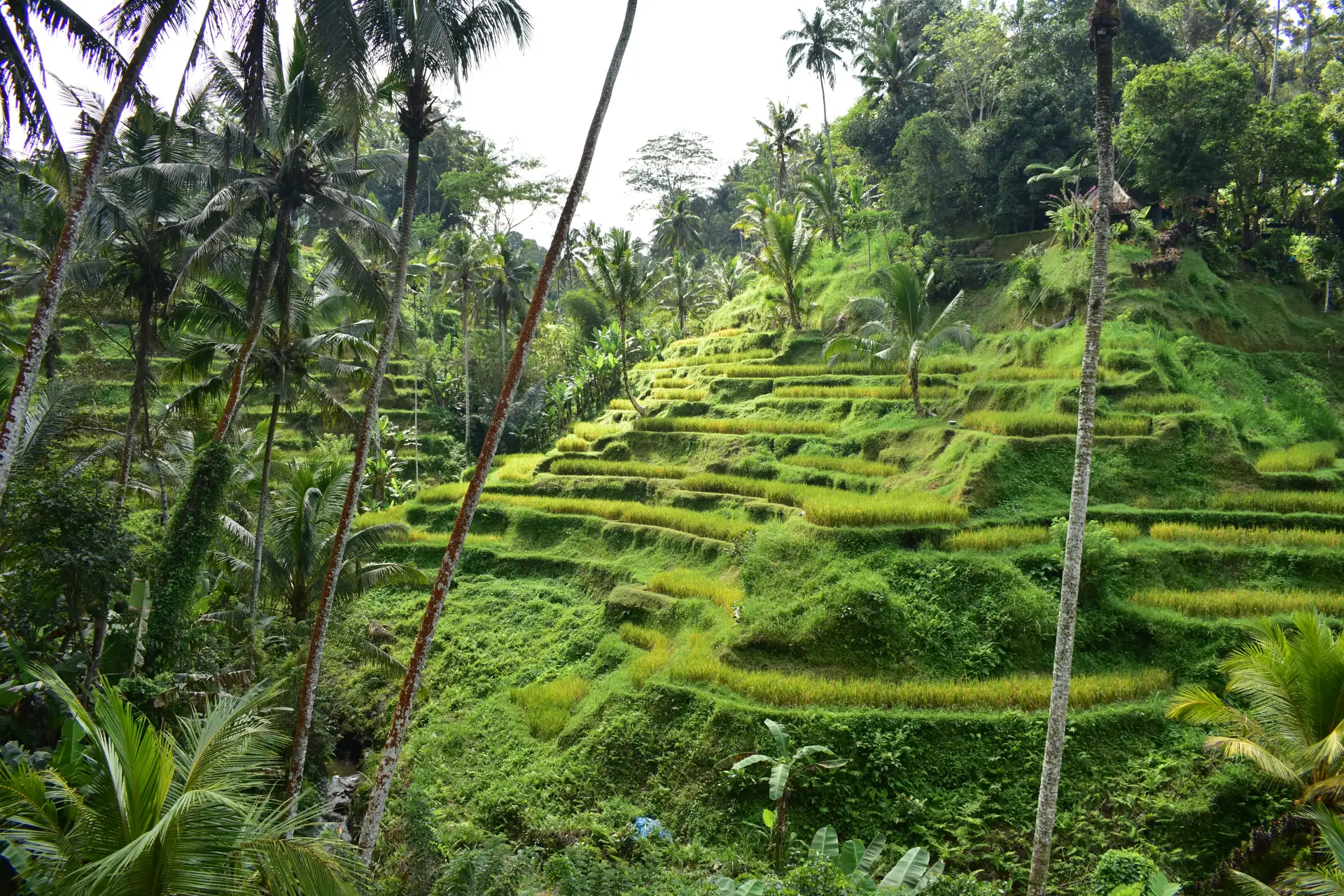 Campos de arroz Tegalalang Rice Terrace
 There are two major terraces declared international heritage thanks to their irrigation system called Subak. This traditional water management system dates back to the 9th century and reflects the philosophy of Tri Hita Karana, which seeks harmony between the realm of spirits, human society, and nature. It is ancestral agricultural engineering and represents a spiritual and cooperative practice that unites the entire community in the care of resources.
Real Data about the Terraces and My Personal Reflection: both terraces are enabled for tourism, but they still serve as work zones for local farmers; therefore, it’s important to respect the trails and workers. In fact, personally, I was quite impacted by walking and encountering people working in the sun’s rays, some of them very old asking for alms. The image was quite strong and left me with a thorn inviting reflection on the different realities we inhabit and how important it is to feel grateful for this vital experience. Some greeted kindly, others invited you to take photos with typical attire in exchange for a collaboration, and many have small stalls where you can sit and enjoy the views while sipping a cold coconut.
Famous Tegalalang Rice Terraces
It’s the most popular and touristy. Its views are equally beautiful. It can be found about 15-20 minutes north of Ubud’s city center.
- The trail and access: The trekking is quite long if you decide to do it complete, but you can opt for shorter sections since it has multiple entrances and exits. The property has free parking.
- Entry costs: It costs around $25,000 IDR (official government payment of Indonesia where they give you a wristband with access).
- Donations along the way: At some points on the route there are “donation stands” (it’s usually suggested to leave around 10.000 IDR) to collaborate with the maintenance of the bridges and paths managed and repaired by local farmers.
- When to go: The views are spectacular and you can do the trail anytime throughout the year. There is a marked trail and different entrances. Additionally, tourist activities in this area are multiple, such as famous swings (swings) and hanging bicycles, whose prices range from 150,000 to 350,000 IDR.
You can book your visit with a guide and photos in the rice fields here [https://www.getyourguide.com/en-us/bali-l347/ubud-entry-to-the-rice-terrace-and-tegallalang-cotton-hammock-con-guide-t456886/?ranking_uuid=7604d510-5b5f-40f0-9755-6444cd1b50c4]
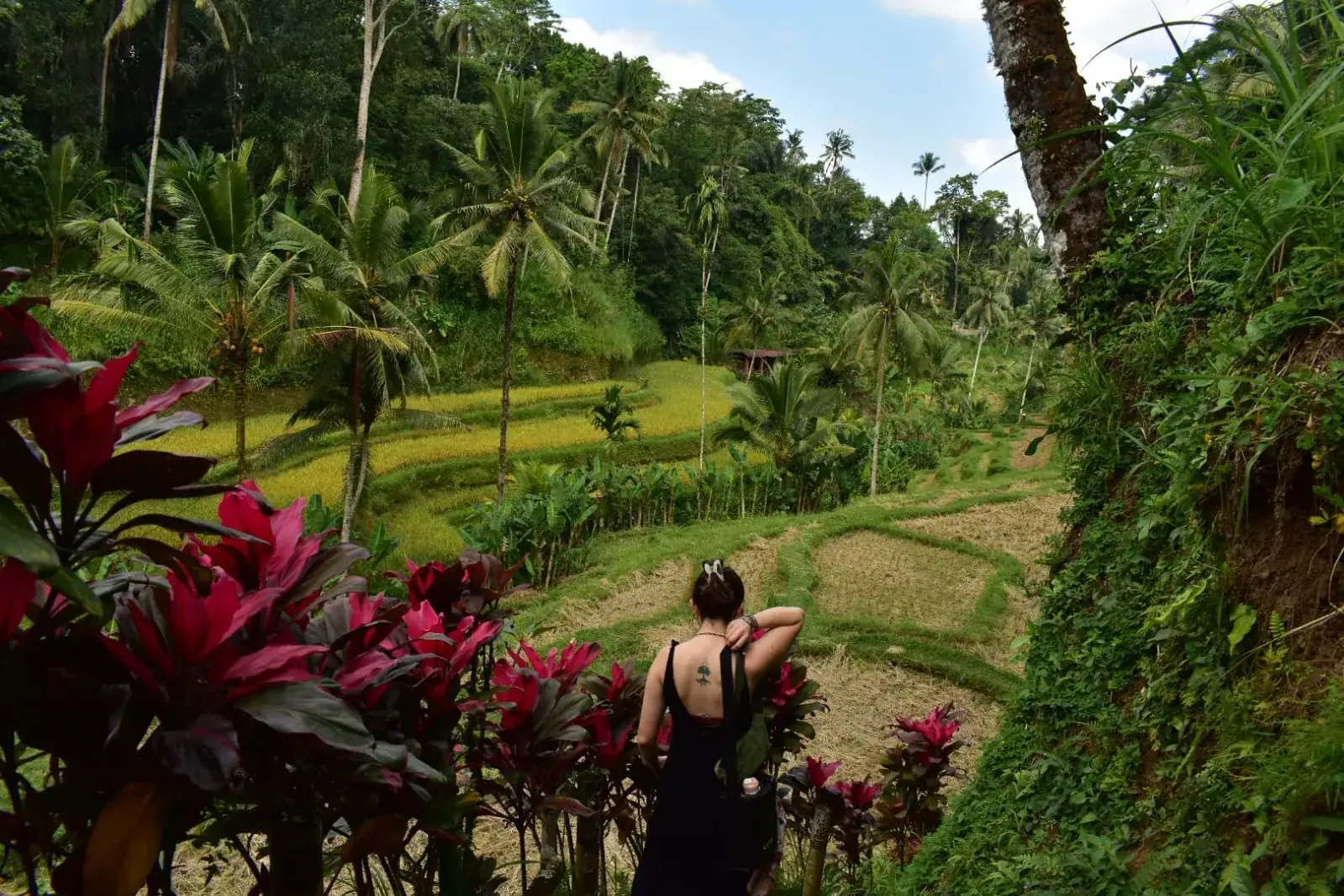 Arrozales en Bali
Jatiluwih Rice Terraces (UNESCO’s Jewel)
This is the one that’s way more towards the north and it’s a lot less touristy. It’s, in fact, a formally declared Cultural Landscape by UNESCO.
- Why Go: It’s a protected area and much larger. You can walk for long periods without encountering many tourists. The air is fresher because it’s at higher elevation, although the walking paths are a bit more “off-road”.
- Costs: The entrance fee has an approximate value of 40,000 IDR (dedicated to maintenance and preservation of this massive site).
- How to Get There: It’s about 60-90 minutes from Ubud. The return trip is spectacular because it goes through very picturesque traditional villages. There are many day trips that depart from central Ubud and include local guides with deep knowledge of the area.
Terrace Tour + Purification Ritual and Transfers
Discover the breathtaking rice terraces of Jatiluwih on this unique Bali tour. This 9-hour adventure begins with a pickup from your hotel, followed by a purification ritual to cleanse your mind, body, and spirit. Next, we’ll explore the stunning Jatiluwih Rice Terraces, a UNESCO World Heritage Site, and enjoy a relaxing break amidst the lush green landscape. In the afternoon, we’ll head back to your hotel, feeling refreshed and rejuvenated. Book now and experience the beauty of Bali!
2. Waterfalls: The Refuge from Ubud’s Heat
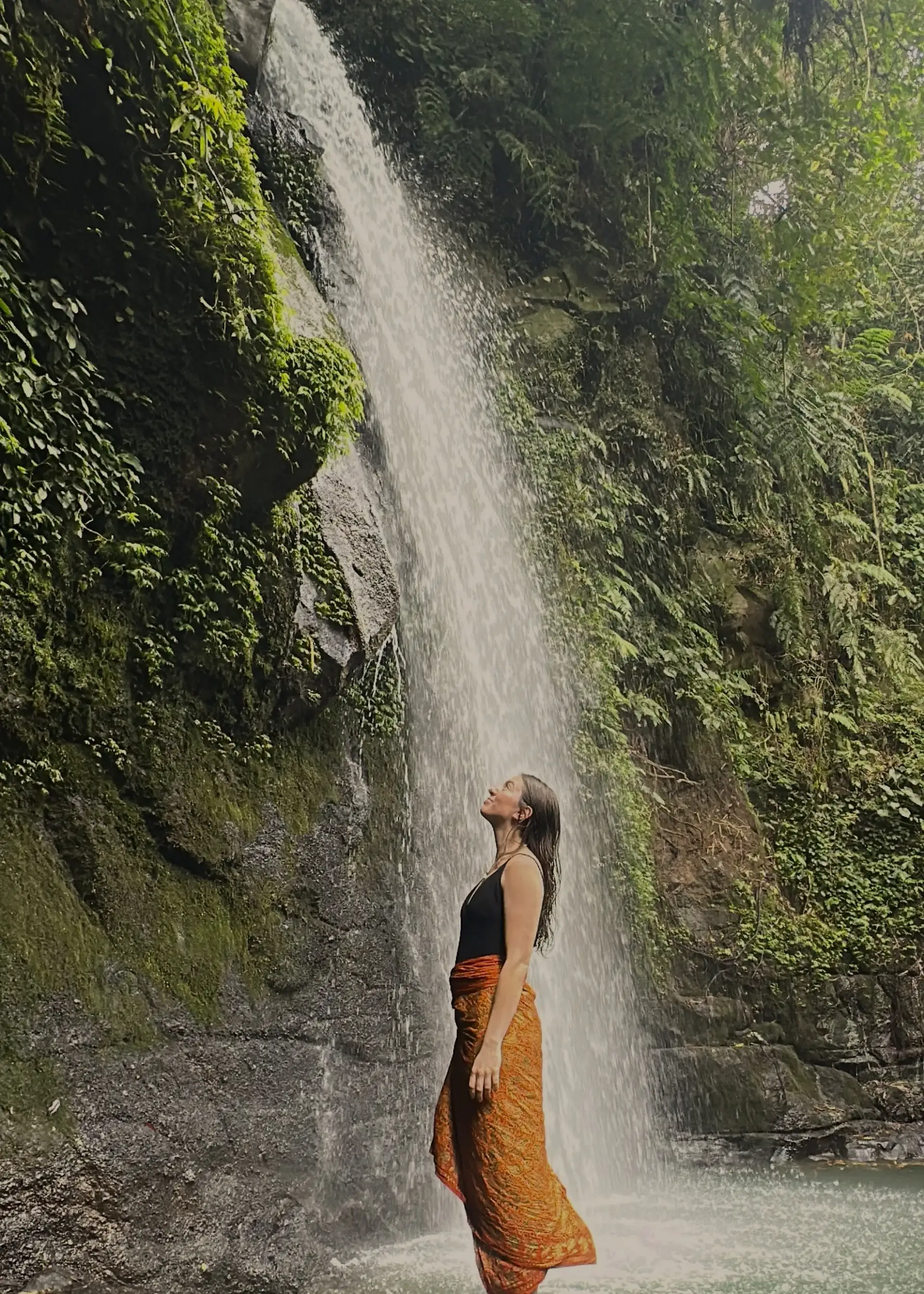 Ulu Petanu waterfall - Ubud Bali
There are countless waterfall options around Ubud and they’re an excellent spot to refresh yourself after a hike under the sun. The time you go is always a key factor in relation to the number of tourists, but from my point of view, they’re always enjoyable. That said: although they usually have maintenance and access stairs, keep in mind that after the rain there’s often quite a bit of mud and slippery areas (not serious, just caution).
Although there are dozens of options, here are the three that we most highly recommend, as suggested by the locals we met along the way:
Here is the translation:
Kanto Lampo: About 30 minutes from Ubud. It’s super scenic because the water falls onto a staircase of rock formations. The access has many stairs and is usually crowded, but it’s very beautiful. The entrance fee is around 25,000 IDR, which is approximately $1.40 or €1.23.
Tibumana waterfall: It’s a small waterfall surrounded by a dense jungle and has a straight and perfect water fall that forms a natural pool ideal for swimming and taking incredible photos. The entrance features stairs and a small temple at the entrance. Although we didn’t explore it, locals recommended this waterfall to us. The entrances cost 15,000 IDR, which is approximately $0.84 or €0.74.
Ulu Petanu waterfall: A hidden gem 40 minutes from central Ubud. It’s a jungle area with pools oriented towards religious ceremonies at the entrance; you have to go down 90 stairs, but it’s a relatively peaceful place with free parking. It features a main waterfall where you can swim, another smaller and more remote one where locals hold daily cleansing ceremonies, and an historic cave called Tampaksiring approximately 200 meters long; the story goes that it was excavated by hand as part of the ancient rice field irrigation system. The entrance to this cave has a significant cost of 10,000 IDR, and the waterfall entrance costs 30,000 IDR. The total cost of both entrances is around $2.24 or €1.9.
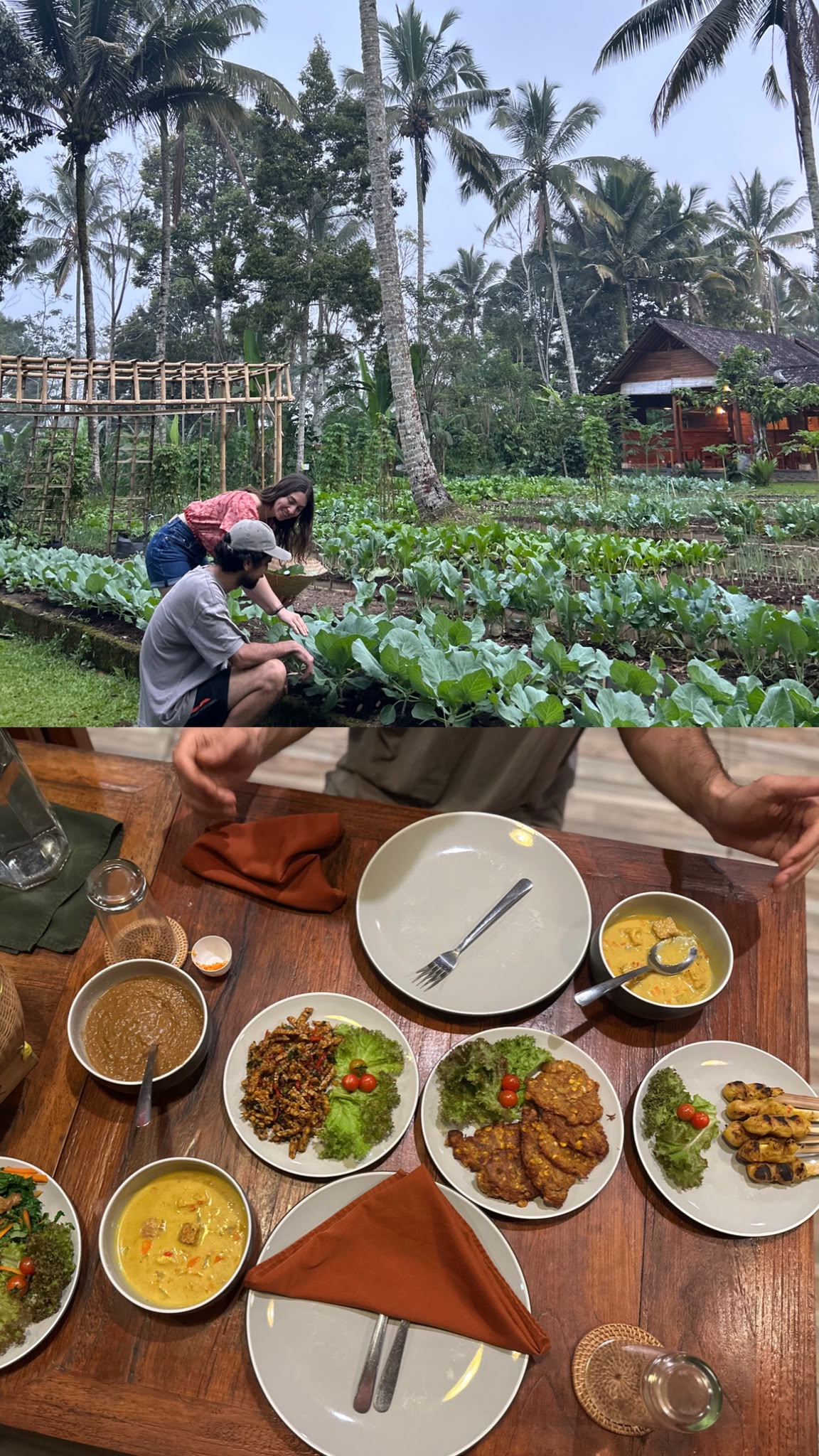 Taller de cocina vegetariana en granja ecológica Ubud
 3. Balinese Cooking Class at an Eco-Farm in Ubud: Our Star Experience
No doubt, one of the experiences we enjoyed most during our trip to Bali was participating in a Balinese vegetarian cooking workshop at an eco-farm. The activity was perfect from start to finish: they picked us up directly from the center of Ubud and took us to the mountains in the north. Upon arrival, the lush vegetation and team greeted us with a genuine “Welcome to the jungle”.
A friendly local girl accompanied us throughout the entire class. We chose the afternoon option and were lucky to be the only group in that session, which turned the workshop into a private romantic dinner within a traditional Balinese building. During the activity, we harvested vegetables from the garden, learned to prepare and tasted 6 vegetarian dishes from Balinese cuisine (which can include meat) that certainly set the culinary bar high. Additionally, the morning includes a visit to the local market. It’s a very authentic and fun off-the-beaten-path activity in Ubud that we highly recommend at 100%. You can book ahead here: Bali Organic Farm Cooking Class.
4. The experience of coffee and the controversial Kopi Luwak: the world’s most expensive coffee
The experience of having a coffee tasting is a classic in Bali. There are hundreds of local plantations where you’re invited to drop by, learn the traditional process of roasting and treating the grains, and even get treated to a free sampling of flavored teas and coffees. It’s nice to reciprocate the hospitality by buying something from their store or leaving a small contribution, but it’s not “required”.
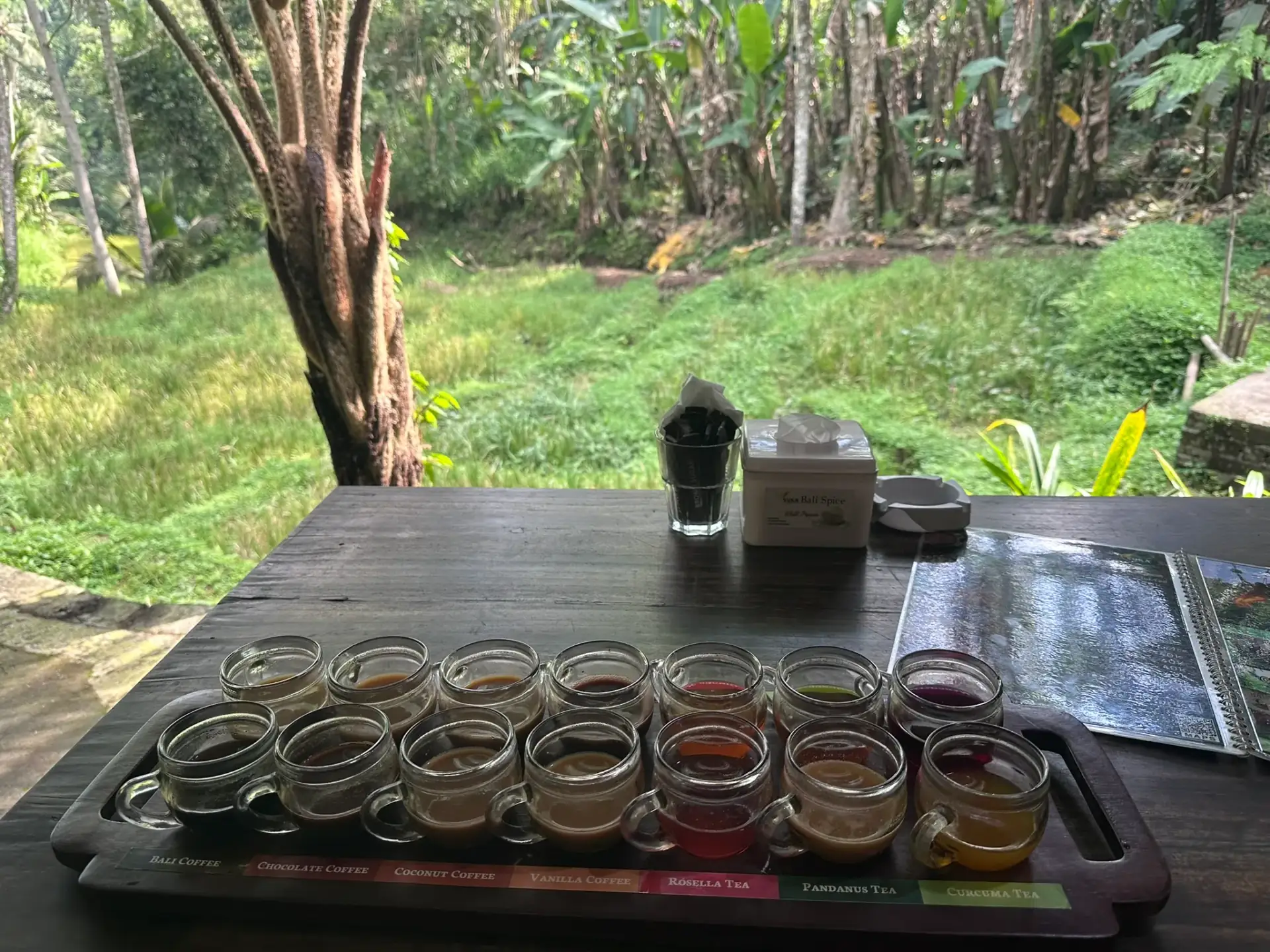 Degustación de té y café local de Bali indonesia
 Many of these plantations have the famous experience of the coffee “world’s most expensive” (Kopi Luwak). This coffee is extracted from beans that went through the digestive process of the luwak (civet), a small mammal of the viverrid family that chooses the sweetest and ripest coffee fruit. As they pass through its intestinal tract and are excreted, enzymes modify the grain proteins, removing bitterness. The collectors manually gather the beans, thoroughly clean them, and then undergo the toasting process.
The Ethical Dilemma of Luwaks: The question regarding the care and living conditions of these animals remains a great mystery to me. Although they may say that the grains are wild in origin, the high tourist demand generated that many plantations keep the luwaks in very tight cages to force them to only eat coffee. I think a possible ethical path, if you decide to try it, is to thoroughly research the place and avoid promoting sites where you see animals in captivity for exhibition purposes.
Despite this, there are places like “Lokasari Agrowisata” that offer an interesting cultural, artistic, and ethical experience in their coffee plantation fields, organic herbal tea production, and honey production.
5. Temples: Rules of Respect and the Rite of Purification
The population of neighboring Java Island often calls Bali “the island of a thousand temples,” and it’s no joke: in each village, there is at least one public temple, plus family shrines that each house has in its yard.
Rules for entering temples in Bali:
Temples are spectacular and sacred places for the local population, so there are a couple of general rules for coexistence that need to be followed:
- Appropriate Attire: Always wear clothing that covers your knees and shoulders. A sarong (traditional fabric worn like a skirt) is mandatory. Many temples lend or rent them.
- Respect the Environment: Maintain silence and respect the space as it is: a place of prayer and active spiritual connection.
- The Menstruation Rule: There are signs at the entrances restricting women’s entry during menstruation. Which surprised me quite a bit, but reading the explanation links it to the concept of sebel in Balinese Hindu cosmology, understood as a state of spiritual vulnerability or temporary ritual impurity related to blood. It presents itself as a rule for energetic balance and sacred space purity that is respected rigorously.
The Rite of Purification (Melukat)
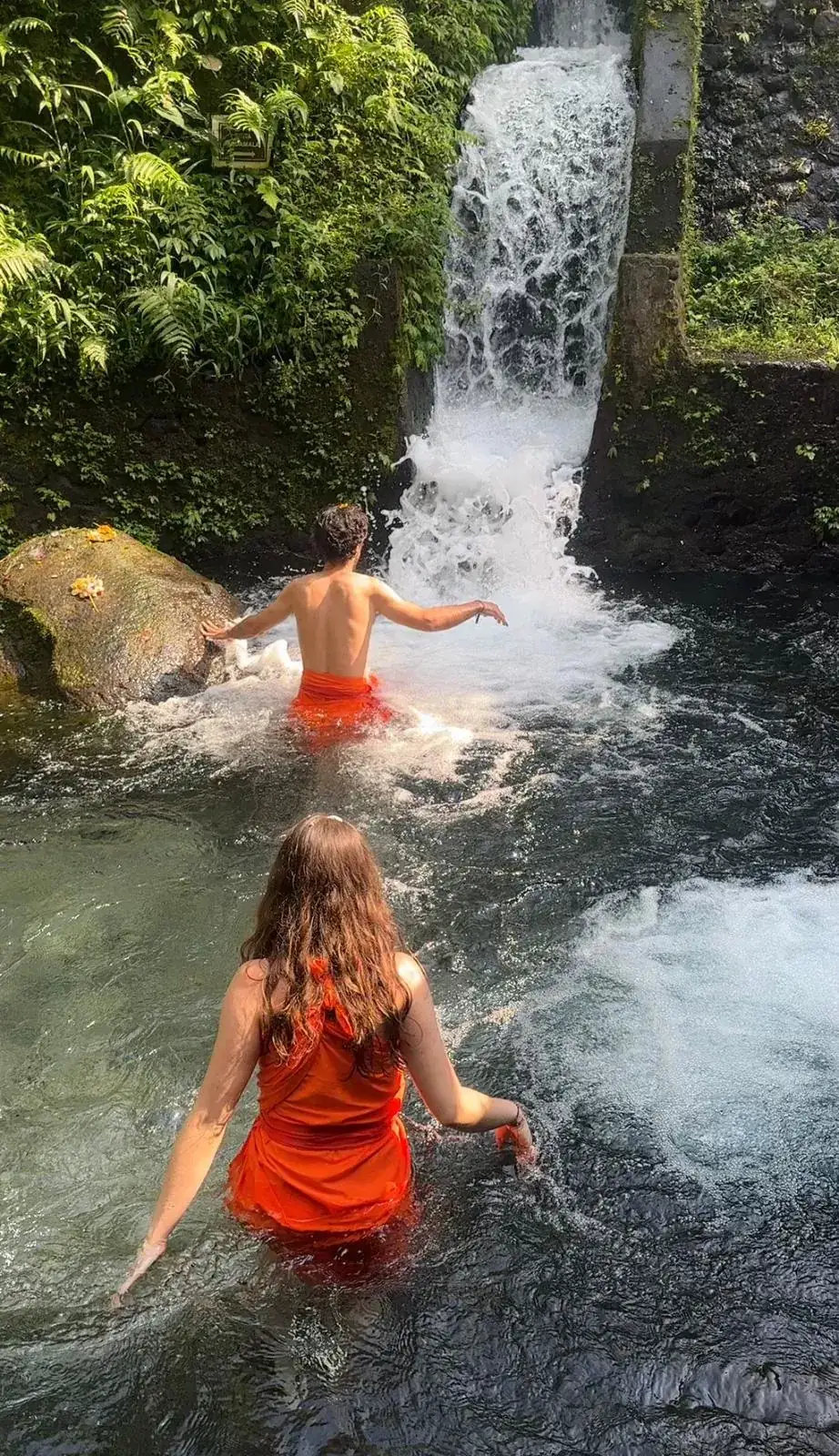 Ritual de purificación Balines en piscinas sagradas, Ubud
 Many of the temples are centered around purification through water, a sacred healing ritual that is performed in various pools with springs depending on the spiritual purpose of each jet of water.
To perform this ritual in a respectful and correct manner, it is necessary to have a local guide accompany you, instruct you on the steps, and help you make the offerings. I know there are many controversies and debates online about this topic and the truth is that for those of us who genuinely want to connect with this faith practice, it’s not pleasant to be haggling over money or worried about potential scams. That’s why I’m leaving you the information that in my case was one of the most important aspects of the trip:
-
General Admission to the Temple: The general admission fee (e.g., at the famous Tirta Empul temple) is around $5.75 USD per adult. Payment is made at the official ticket booth. With your admission, you’ll be provided with a basic Sarong to explore the complex, but it’s your responsibility to ensure your shoulders are covered. NO need to buy a sarong from vendors at the entrance. If sellers insist and you don’t want to buy, simply smile and continue on towards the official ticket booth.
-
Local Guide: A guide who explains the history, mysticism of the place, and accompanies you step-by-step in the pool is necessary to avoid disrespect (not to mention we’re not clear if the ritual can be done without a guide). You can contact certified guides in advance through internet or hire one at the temple entrance. Our advice for this second option is to clearly agree on their fees before starting (as we’ve learned from experience). The guide’s fee typically ranges around $15 USD per person.
-
The Purification Ritual (Additional Costs):
-
Ritual Attire: It is mandatory to enter the water with a special purification sarong (you cannot use the same dry sarong you walk around the temple in). The rental cost is approximately 15,000 IDR.
- Lockers (Casilleros): To leave your dry belongings while you’re in the water, the rental cost is between 10,000 to 15,000 IDR per person.
- Offerings (Canang Sari): These are small baskets of palm leaves with flowers and incense that are presented before entering the water. They have a cost of approximately 10,000 to 20,000 IDR (usually facilitated by the guide).
-
Estimated Total Experience Cost: Approximately between 200,000 to 250,000 IDR (around 13-16 USD) for performing a complete and respectful guided purification ceremony, including entries, rentals, and offerings.
A reasonable option that seems to us after our experience, to avoid breaking the mystique of the moment, is to book in advance a tour that includes everything.
We find interesting this tour that includes the ritual, entrance fees, additional costs, and you can also get to know Jatiluwih’s (less touristy) rice terraces.
6. Traditional Dance: The Power of Kecak and the Elegance of Legong
“The ‘Fire Dance’ (Kecak) is impressive due to its frenetic rhythm, but the women’s dances (Legong) possess elegance and control of bodily movements. Originally, these dances were performed in royal courts in front of nobility to recount founding myths.”
Both take place in sacred temples: the Legong dance, which is performed daily at the palace and changes according to the day, but everything takes place near Ubud central. The Fire Dance Kecak also takes place there, changing depending on the day. Both performances start at 07:30 pm, so it’s recommended to arrive 30 minutes earlier to get a good spot. Tickets can be purchased online, at the entrance, or from authorized street vendors who kindly hand you a brochure and answer all your questions. The ticket costs approximately 100,000 IDR, which is around $5.60 USD or €4.90. Refreshments are also sold at the entrance.
On this occasion, we opted for the famous Kecak Dance ([https://www.getyourguide.com/ubud-l32246/bali-entradas-para-el-espectaculo-de-danzas-kecak-y-del-fuego-de-ubud-t761650/?ranking_uuid=a25889a5-e5aa-4cf1-bb86-4ca8e92b23a2&q=ubud+Danza+Kecak%3A+la+danza+del+fuego&adults=1]), an impressive cultural show that features over 70 actors on stage.
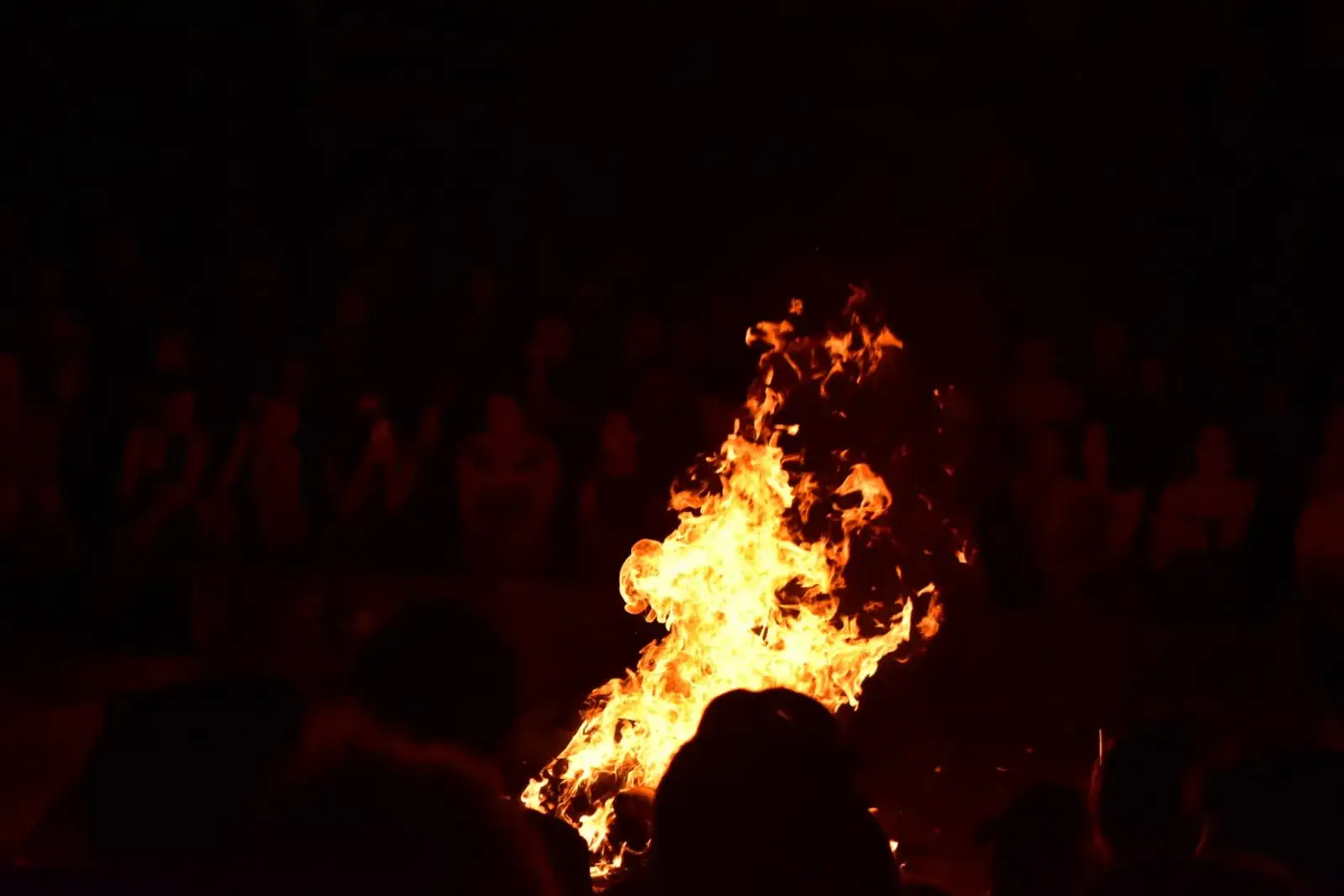 Danza Kecak: la danza del fuego show nocturno en el templo de Ubud
Fire Dance: The Dance of Fire
The fascinating thing about this production is that it doesn’t use any musical instruments as background. The sound, atmosphere, and rhythm are created exclusively by a chorus of over 70 men seated in concentric circles, who modulate their voices imitating different sounds and enter into a state of sonic trance throughout the performance (this is a personal reflection due to the peculiar way they expel air through their throats) and the constant rhythm sustains the show.
At the beginning, the dance tells a fragment of the Hindu epic Ramayana: the love story of Prince Rama and Princess Sita, the kidnapping of the latter by the evil multi-headed demon Ravana, and the subsequent mystical battle where the brave monkey army led by the simian god Hanuman intervenes. At the end (during the last 10 or 15 minutes of the performance), the fire dance unfolds, where a barefoot dancer in a state of mystical trance steps on and scatters lit coconut embers with their own feet.
Entries for the Danza del Fuego show
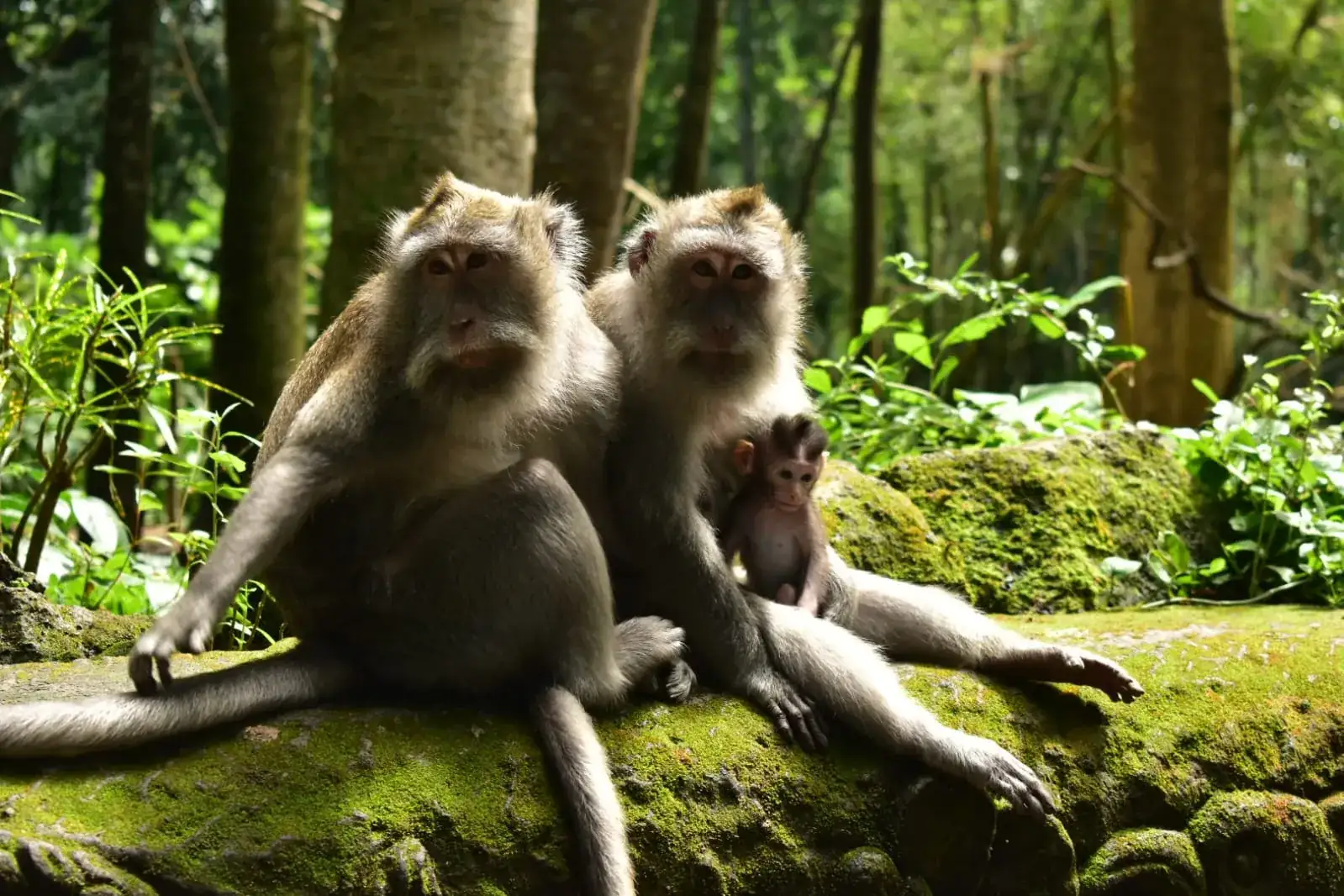
7. Sacred Monkey Forest Sanctuary: The sacred home of monkeys
Located at the end of the bustling Monkey Forest Road, this sacred forest is an ecological and spiritual reserve managed by the local community of Padangtegal.
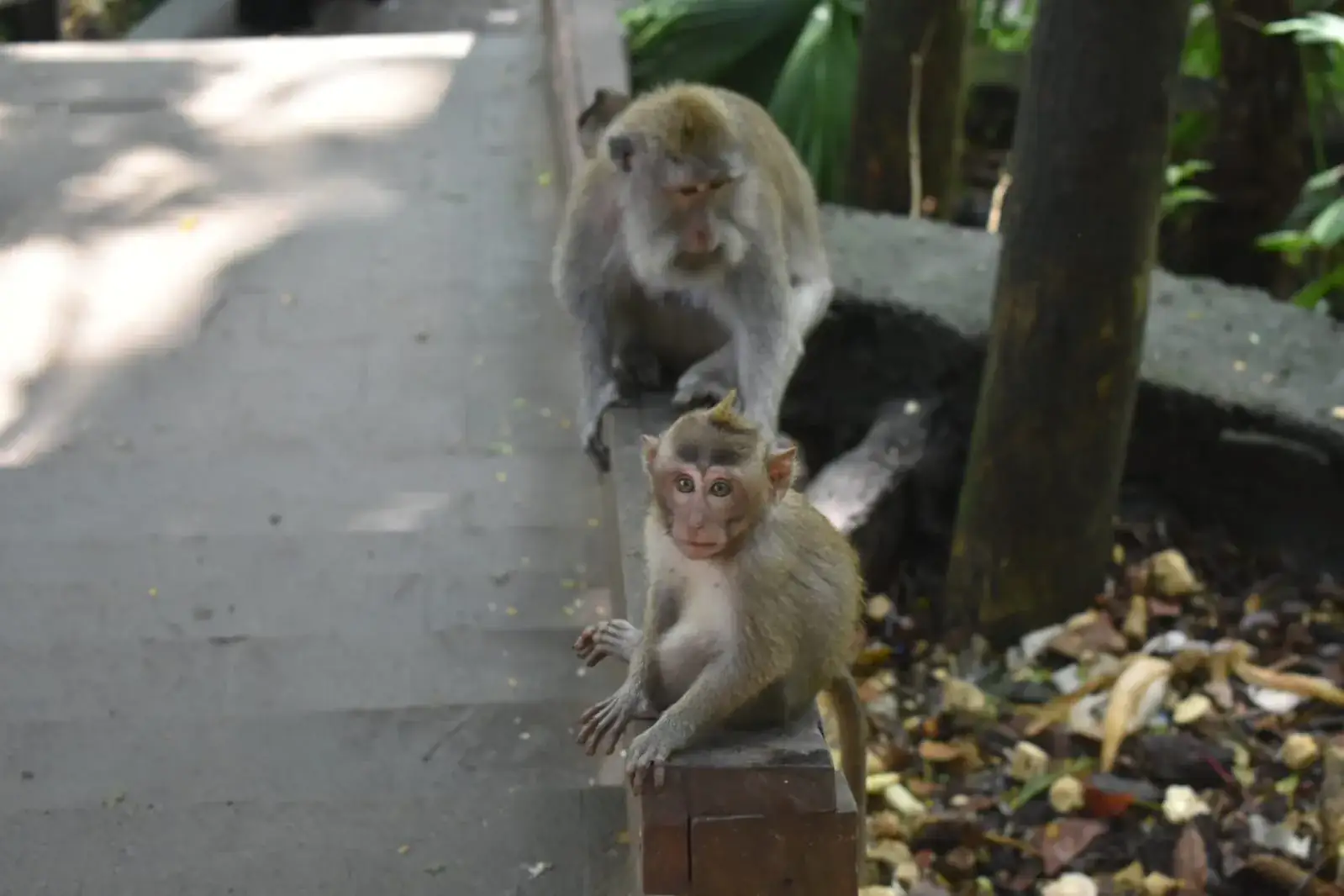 class="img-caption">Sacred Monkey Forest Sanctuary
This sanctuary is governed by the concept of Tri Hita Karana (harmony between humans, nature, and God), preserving three active sacred temples from the 14th century that can be seen from the outside but not entered. It’s a flat, easy-to-walk path, an interesting local experience suitable for all ages. Additionally, the path has many trees so the heat isn’t terrible, making it a more enjoyable experience.
Entrance Costs: The entrance fee is $130,000 IDR for international adult visitors and $100,000 IDR for children (approximately $7.27 USD or €6.37 for adults and $5.60 USD or €4.90 for children). The park is open every day from 9:00 AM to 6:00 PM and has self-service kiosks that accept cards, or tickets can be purchased online. There are also guides available who can accompany you and explain the tour of this or other points of interest.
To get advanced tickets for the Monkey Forest, click here
Strict Safety Rules: Although the long-tailed macaques are very gentle, they are still wild animals. For your safety and theirs, the center recommends:
- Don’t enter with loose plastic bags or bottles.
- Avoid getting too close, especially to those with their babies (although we actually saw a lot of people doing this above all, literally).
- Don’t stare at them directly: since in their body language, direct eye contact is a sign of aggression.
- Don’t hide food in your backpack and be cautious with personal items like glasses or shiny objects, as they are very curious and trusting.
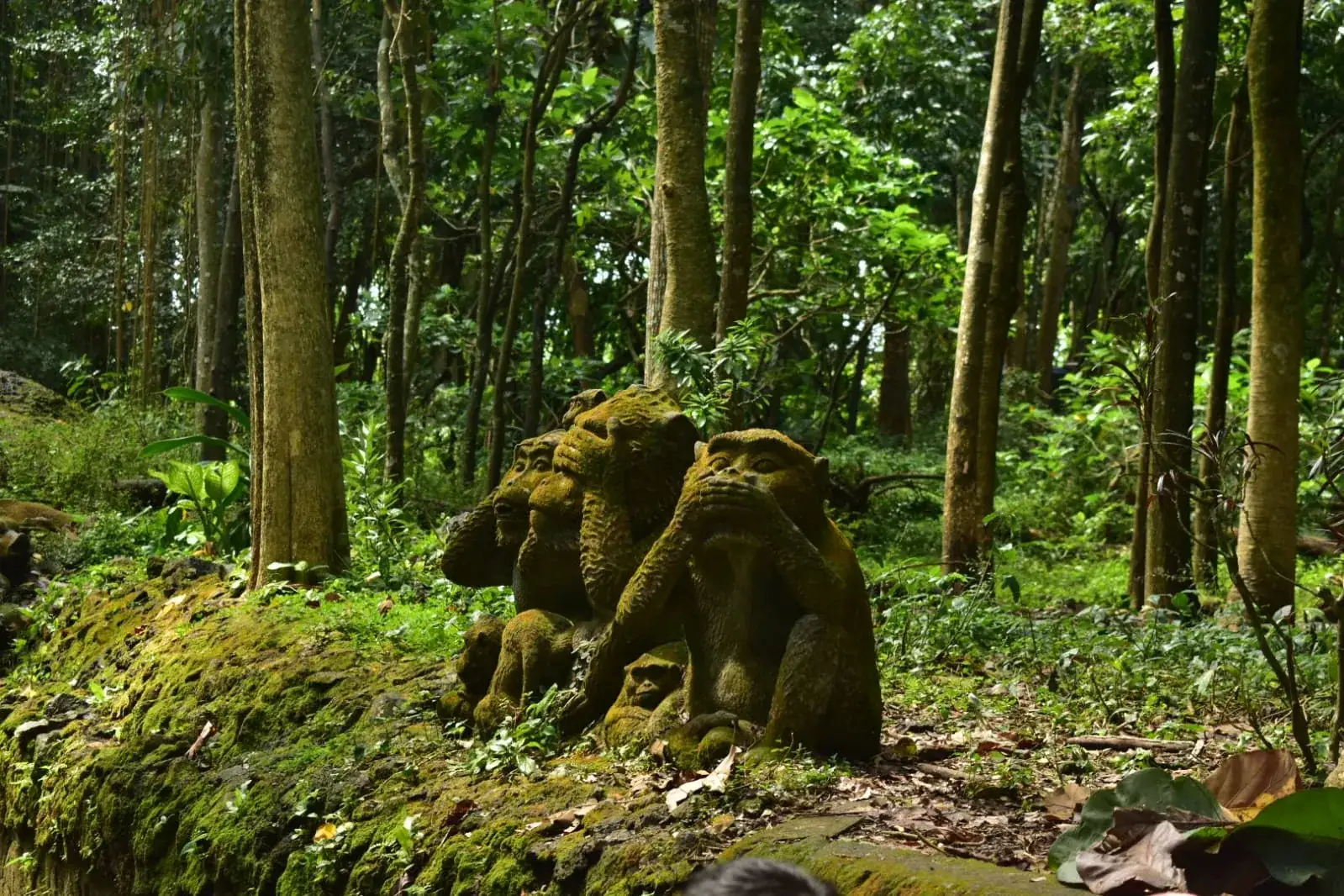 Sacred Monkey Forest Sanctuary
The famous “Selfie with the monkey”: the famous photo where it looks like the monkey is holding the cellphone. You need to buy a photography voucher inside (the spots are limited per batch) and they will take care of guiding the animal in a safe manner using small fruit pieces; it’s only done under supervision by the trained staff of the reserve and it’s very funny to watch.
8. Ubud Palace (Puri Saren Agung)
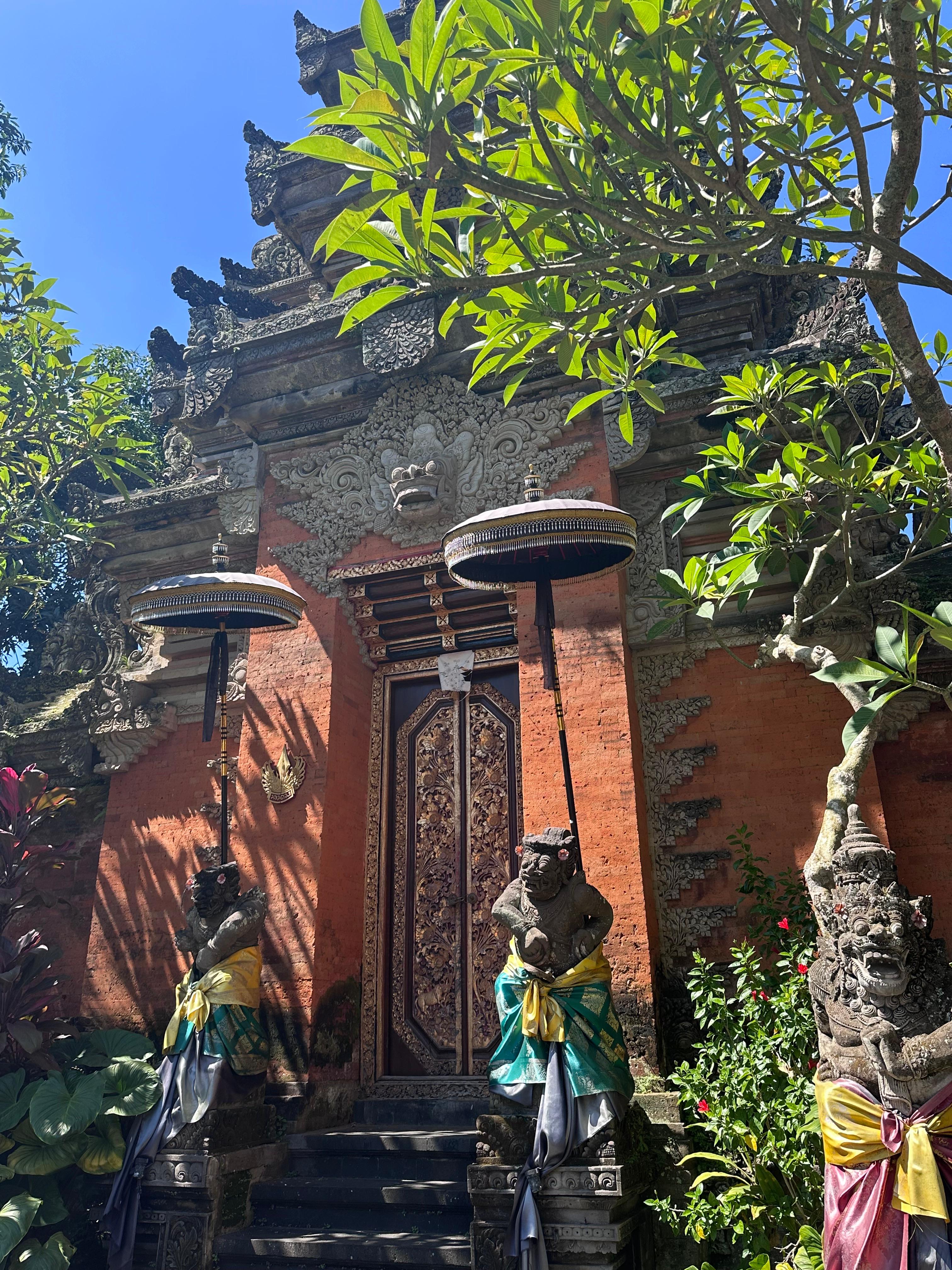 Palacio real Ubud durante el dia
Located at the corner of Jalan Raya Ubud and Jalan Monkey Forest, facing the traditional art market, the Ubud Palace is the geographical and historical epicenter of the city. Built during the reign of Ida Tjokorda Putu Kandel (1800-1823), it still serves as an official residence for the royal family of Ubud, so only its public exterior patio and intricately carved stone gates decorated with golden leaves can be explored.
- Day visit: Entry is completely free during the day (from 8:00 AM to 5:00 PM). It takes about 10 or 15 minutes to get around; I think it’s a practical stop since it’s in the city center and allows you to admire up close the marvelous classical Balinese palace architecture. Plus, inside there’s a restaurant.
- Night shows: Every night, from 7:00 PM onwards, the main courtyard transforms into an illuminated stage lit by torches for traditional Balinese women’s dance Legong.
Editor’s Note: Dear reader, please note that prices and regulations in Bali fluctuate according to season and updates from local administrations of each regency. It is recommended to always carry cash in Indonesian rupiah (IDR), as many temples and waterfalls do not accept credit cards.
Where to Stay in Ubud
We tried several options, but I think I have a solid recommendation for those who want to enjoy the traditional calm of rice fields, get to know the city, and be close to different areas to visit. While staying in the center is an easy option since you can walk to various restaurants and shows, it’s worth noting that it’s a very touristy and crowded area. If I had to choose again, I’d likely go for the second area where we stayed: on the outskirts, a bit northeast of Tegalalang and just 10 minutes from Ubud central. The surrounding areas offer very peaceful and beautiful spaces; another advantage is that you won’t waste time stuck in city traffic when leaving (which is a big data point to consider). You’ll be able to see the map with different options near the reference area below.
Cost Table for Activities, Entrance Fees, and Tours in Ubud
Blog note: Prices in IDR correspond to official ticket prices at the box office 2026 if you decide to visit on your own. For your convenience, we’ve linked guided tour options or advance reservations with transportation for each attraction’s name if you prefer to have a set itinerary and avoid lines. Using our link, the cost is the same for you and helps us continue creating this blog.
Price List for Ubud, Bali
| Reference | Cost IDR | Cost USD | Cost EUR | Observations |
|---|---|---|---|---|
| Tegalalang Rice Terrace | 25,000 | 1.39 | 1.22 | Official payment at the ticket booth. Link includes guided tour with swing. |
| Jatiluwih Rice Terrace (UNESCO) | 40,000 | 2.23 | 1.95 | Ticket price at the ticket booth. Link to full excursion. |
| Activities in Tegalalang (Swings / Bicycles) | 150,000 - 350,000 | 8.36 - 19.50 | 7.31 - 17.05 | Prices vary according to attraction chosen |
| Cascada Kanto Lampo | 25,000 | 1.39 | 1.22 | Local entrance at the door. Link to guided tour for multiple waterfalls. |
| Cascada Tibumana | 15,000 | 0.84 | 0.74 | Local entrance at the door. Link to combined tour. |
| Cascada y Cueva Ulu Petanu | 40,000 | 2.23 | 1.95 | IDR 30,000 for waterfall + IDR 10,000 for cave at the ticket booth. |
| Bali Organic Farm Cooking Class | 628,000 | 35.00 | 30.60 | Full vegetarian class with hotel pickup and ingredients. |
| Coffee Lokasari Tour | 108,000 | 6.00 | 5.25 | Guided tour of plantation, tea, coffee, and pure honey tasting |
| Entrada Templo Tirta Empul | 75,000 | 4.18 | 3.65 | General entrance at the ticket booth (includes dry sarong rental). |
| Full Ritual Purification Experience | 200,000 - 250,000 | 11.14 - 13.93 | 9.74 - 12.18 | Estimated at site (entries, guide, wet sarong, locker, and offerings). |
| Excursión Ritual Purificación + Jatiluwih | 1,418,000 | 79.00 | 69.08 | Private guided tour with transfers and lunch included |
| [Entrada Palacio de Ubud (Puri Saren Agung)] | Gratis | 0.00 | 0.00 | Free access to the main courtyard during the day (8:00 AM - 5:00 PM). |
| Currency Exchange Rate Reference | 100,000 | 5.57 | 4.87 | Data updated July 2026 (subject to change). |
Frequently Asked Questions
-
What is the best time to visit Ubud?
The best time is during the dry season, which runs from April to October. During these months there are fewer rains, the paths of waterfalls and rice fields are in better condition, and the climate is ideal for exploring.
Is it safe to explore Ubud and its surroundings?
Yes, Ubud is an extremely safe destination for travelers, families, and solo travelers. Just take basic common-sense precautions, such as wearing a helmet when renting a scooter, being cautious with valuable items at the Monkey Forest, and booking guided tours with official guides. Special caution should be taken when walking on the street since outside of the city center, there are usually no sidewalks to walk on; in general, drivers are attentive, but it’s recommended to walk during the day, carefully and in a group.
-
How to Get Around in Ubud?
If you have experience, renting a scooter is the fastest and most affordable way (between 50,000 and 80,000 IDR per day). If you prefer to avoid intense traffic in the city center or don’t drive a motorcycle, you can hire a taxi or hire a private driver for the day to explore waterfall routes and temples or use apps like Gojek/Grab for short trips.
-
How much does the entrance fee to Monkey Forest Ubud cost in 2026?
The general entry fee for international adults costs $130.000 IDR (approx. $7.20 USD / €6.30) and for children $100.000 IDR (approx. $5.50 USD / €4.90). Tickets can be purchased directly at self-service machines or online.
From now on, thank you for reading and have a great trip!
You might also be interested in
If you’re looking to combine Ubud’s nature with quiet beaches and snorkeling, we recommend reading:
If you want to learn about Balinese culture:
If you want to plan your trip to Bali:
- Traveling to Bali in 2026: Requirements, Transportation, and Areas to Stay