Traveling to Bali in 2026: Requirements, Transportation, and Places to Stay
En este artículo
- Practical details of our route
- Town Centre
- Coastal Areas
- Countryside
- Nature Reserves
- Arriving in Bali and the Airport Challenge: A Tip from Experience
- Cuisine and Water: Never “Bali Belly”
- Getting Around Bali: Drivers, Motorcycles, and Balinese Traffic
- To move around in daily life there are several options:
- Balinese Dictionary for Travelers
After 48 hours of thrilling struggles with those technical issues that are just part and parcel of traveling, we finally arrived at one of my dream destinations: Bali, Indonesia. This island, famous for its charm and unique spiritual culture, had been calling to me for a while and my soul was inviting me to follow that desire.
Longing for eternal summer, we arrived in mid-June, just a little before the peak season started, and found ourselves on this enchanting island, filled with people radiating beautiful energy that always greets you with a smile. In the first 12 hours of sunshine, we had already chatted with four different people who chat simply for the pleasure of swapping stories. Many come from various parts of Indonesia and tell us they decided to come here to practice languages and satisfy their curiosity about other cultures while sharing theirs. That’s how we met Roi right after exiting the airport with whom we chatted long and laughed, giving us a warm welcome to this corner of the world.
Practical details of our route
For those planning their first steps in this corner of Indonesia, I leave some notes that we researched and served us when drawing our itinerary:
- Arrival Airport: Airport Internacional Ngurah Rai (Denpasar).
- Basic Requirements: Passport with at least 6 months’ validity. It’s important to check if your country of origin requires Visa On Arrival (VOA) upon entry. The airport entrances are different. In our case, we had to obtain it beforehand and were given a QR link. The process was very simple: scan the passport, present the QR, and inspect the luggage. I think it was the friendliest customs officer I’ve seen to date. The current cost of VOA is IDR 500,000 (approximately USD 32). You can check official requirements on Indonesia’s Migration Page.
- Currency: Indonesian Rupia (IDR). Bringing some cash for initial expenses is essential. The number of zeros becomes quite complex for those who aren’t math whizzes, so a quick reference for 2026 is to calculate that 1 USD equals around 17,800 rupias, and 1 NZD is around 10,200 rupias. A bill of IDR 100,000 (the largest denomination and red color), think it’s roughly less than 6 USD or almost 10 NZD. This helps a lot in calculating daily expenses without going crazy.
- Culture: Hinduism balinese is mainly the religion, just like the language is local. Although Bahasa Indonesia, the official language that unifies all of Indonesia, is also understood, to learn more about local culture I recommend reading the article: The Soul of Bali: Rituales, Family, and the Secret of Balinese Happiness
General Overview: The Island’s Landscape and Where to Stay
A beautiful island of volcanic origin, with a rugged coastline and lush green forests. The highest point on the island is 750 meters above sea level, and its unique landscape has been shaped by centuries of erosion from the elements.
To get the most out of your trip, we recommend staying in one of the following areas:
Town Centre
The heart of the island’s activity, with a wide range of accommodation options, restaurants, bars, and shops. It’s a great place to soak up the local atmosphere and be close to all the main attractions.
Coastal Areas
For those who love the sea, we suggest staying in one of the coastal towns or villages. The sound of the waves, the smell of saltwater, and the stunning ocean views will make your stay truly unforgettable.
Countryside
If you’re looking for a more relaxed atmosphere and want to experience the island’s natural beauty, consider staying in the countryside. You’ll find charming rural villages, picturesque valleys, and breathtaking mountain vistas.
Nature Reserves
For nature lovers, we recommend staying near one of the many nature reserves on the island. These protected areas are home to an incredible array of flora and fauna, and offer hiking trails, birdwatching opportunities, and stunning scenery.
While organizing the route, we were understanding that Bali has different rhythms depending on where you decide to settle in. In our case, the search for calm and nature was leading us, but upon investigating, we saw a very clear general panorama. If you’re wondering which zone to choose, dear reader, here’s a quick summary for you to get your bearings on the map:
- Uluwatu (South Extreme): This is one of the most touristy areas by excellence. Located towards the south on the Bukit peninsula, this area unfolds imposing cliffs and hidden white-sand beaches that seem like movie scenes. It’s paradise for experienced surfers (rock bottom) and the ideal spot to watch the most epic sunsets from above. Although the variety of accommodations is wide, in this area you’ll find more luxurious boutique hotels (medium-high budget compared to other areas).
- Ubud (Center): Ideal for those who want to connect with Balinese culture, do yoga in a green environment, surrounded by rice fields, temples, and a relaxed vibe. The tourist activity offer is very wide, although the center can be quite crowded towards the north, there are many hidden gems to discover. If you want to learn more Ubud Guide: Culture, Hidden Gems, and Costs 2026
- Kuta and Seminyak (South/West): They’re very close to the airport (where we spent our first hours). This is the most touristy, commercial, and noisy area. Excellent option if you want to learn how to surf (the waves are gentle for beginners and the bottom is sandy), there’s also a variety of bars with music for the night (many of them on the beach). Accommodation is quite accessible and the variety is endless. If you’re a digital nomad, there’s a 24-hour café near Denpasar perfect for working at night.
- Amed (East): For those who want to escape the tourist bustle, this is the corner. It’s a fishing village much more tranquil and authentic, famous for its black volcanic sand beaches and having one of the best points on the island for snorkeling and diving.
Arriving in Bali and the Airport Challenge: A Tip from Experience
The first cultural shock (and energy) happens as soon as you step out with your luggage. As you arrive at the airport, taxis surround you, the noise is quite loud and the calls are endless; therefore, it’s recommended to download the Grab app beforehand. Just like Uber, you’ll know the exact price to pay (which can be settled in cash with the local currency, Indonesian rupiah). Another option to support the locals is to adjust the transportation cost beforehand with some of the taxi drivers who are there.
The same thing happened to us with connectivity. Being connected as soon as we landed gave us a tremendous sense of calm. A practical suggestion is to take care of app requests for cars and internet beforehand; we used an Airalo eSIM that activates easily via email upon arrival and has very competitive prices.
Cuisine and Water: Never “Bali Belly”
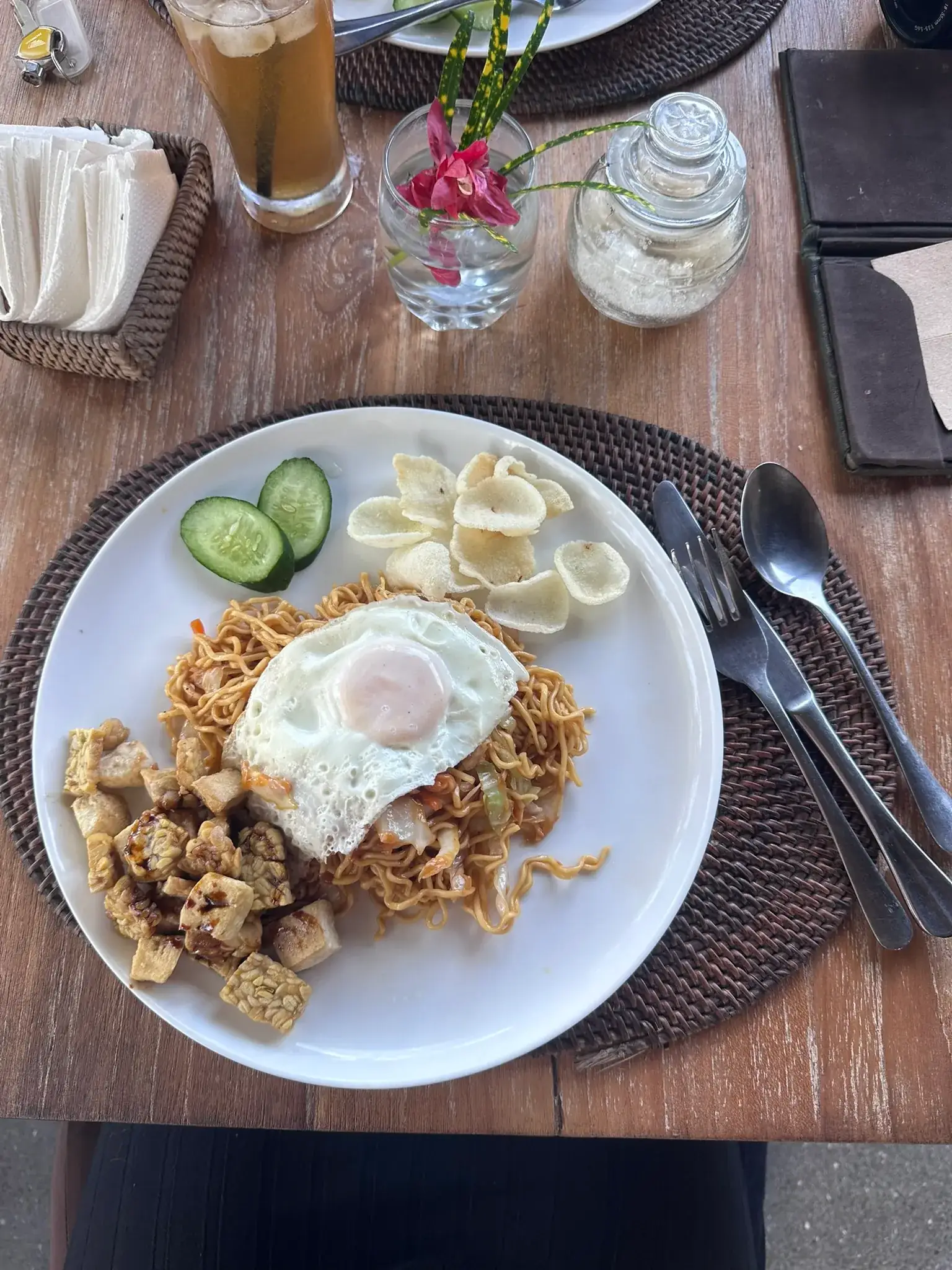
Another key point for the first days is food. The island is full of Warungs, which are small local restaurants run by families. Here you can try delicious local plates like Nasi Goreng (fried rice) or Mie Goreng (fried noodles) with vegetables at a very affordable price. Sitting down to eat at a warung isn’t just friendly on the wallet, but it’s also the best way to connect with Bali’s real culture. There are many blogs that talk about famous indigestion, even some that recommend only eating at Western restaurants. In our experience, informing ourselves through comments and Google Maps ratings, we didn’t have any issues, except knowing you almost always need to add the 10% IVA.
Important Notice: The Topic of Water
The general rule is never to take water from the tap (faucet). The water system is not potable and can give you the infamous “Bali Belly” (traveler’s intoxication that leaves you in bed for several days). It is recommended to use bottled water, even for brushing your teeth. The good news is that ice in tourist restaurants and cafes usually safe because it is regulated by the government and made with purified water, but it’s always a good idea to ask.
Getting Around Bali: Drivers, Motorcycles, and Balinese Traffic
Once settled, the topic of moving around has its own mystique. For long distances or when you’re carrying luggage (like our trip from Kuta to Ubud), the best option are local drivers or using the Grab app. Private drivers will meet you, help load your bags nicely, and those who speak English will regale you with stories and exchange cultural tidbits along the way. That said, golden rule: always, but always, clarify and negotiate the price beforehand. We always compare to Grab, but it’s demand-driven (a typical leg from Kuta to Ubud averages around 400,000 rupias, or about $25). We did it with our new friend Anderson.
To move around in daily life there are several options:
- Grab Moto: Advantage: experienced local drivers. Disadvantage: if you’re like me, it’s a pretty extreme and fast adventure.
- Local Drivers, Grab App or Auto Taxi: Many times through apps like Nomad Table shared rides come out, which gives it a lot of economic sense. Anyway, private transfers aren’t usually inaccessible and you count on the air-conditioned car safety.
- Motorbike Rental: It’s very common to rent a scooter to get around the island. To be honest, I was impacted by the feeling of feeling the Balinese breeze, riding different zones, and glimpsing rice fields. But yes, traffic is crazy. My advice is that if you’re not an experienced driver, take your time to evaluate if you’re really prepared for this experience. Bikes come from everywhere, rules are more like “suggestions,” and horns are used to warn “I’m here” rather than fighting. If you dare to rent, only do it if you have prior experience and always wear a helmet for safety (it literally saves your life) and also to avoid fines.
- Travel Insurance: It’s essential to have insurance that hopefully you won’t need to use.
Balinese Dictionary for Travelers
It always seems respectful to try to learn some basic words, at least the basics of the local language in the country so here are some references for key words and concepts to get to know, if you’re interested in delving deeper into the culture you can read The Soul of Bali: Rituales, Family, and the Secret to Balinese Happiness
- Om Swastiastu (Hello): The traditional Balinese spiritual greeting, accompanied by a slight bow with hands clasped in front of the chest in a prayer-like manner.
- Matur Suksma (Thank you): The respectful way to say thank you in the Balinese language (you can use the more informal Suksma for daily interactions on the street).
- Barong: The village protector who brings blessings. Usually, children from each village go out into the streets with instruments and a costume that represents this character.
It’s possible to watch the parade, take photos, and contribute some collaborative coins. Just keep in mind: if you run into one of them on the street, you’ll have to wait until they’re done or take a detour down another street. They won’t move: it’s their ritual, culture, and you need to respect it. My personal recommendation is that you stop and enjoy what’s going on.
Sarong: The traditional cloth garment that’s required for temple entry. It’s worn around the waist like a skirt or blouse, equally suitable for both men and women.